
Servicio de la máquina
Explain reversing frequency, acceleration, inertia, positional repeatability, shaft support and service interval. These inputs help the quotation reflect the actual machine rather than an industry label.
Automation systems use intersecting-axis drives where packaging is tight and motion may reverse frequently. The gear pair must be considered together with inertia, bearing support, commanded motion and maintenance access.

In automated equipment, the gear set rarely works alone. Motor, coupling, bearings, shafts and the downstream mechanism all influence how reversal and torque are seen at the teeth. A useful RFQ describes that motion profile instead of treating the gear as a static catalogue item.
If the gear is part of a servo-driven mechanism, explain whether the downstream process depends on repeatable angular position or simply on power transfer. That distinction changes which inspection results are useful to the buyer.
Explain reversing frequency, acceleration, inertia, positional repeatability, shaft support and service interval. These inputs help the quotation reflect the actual machine rather than an industry label.
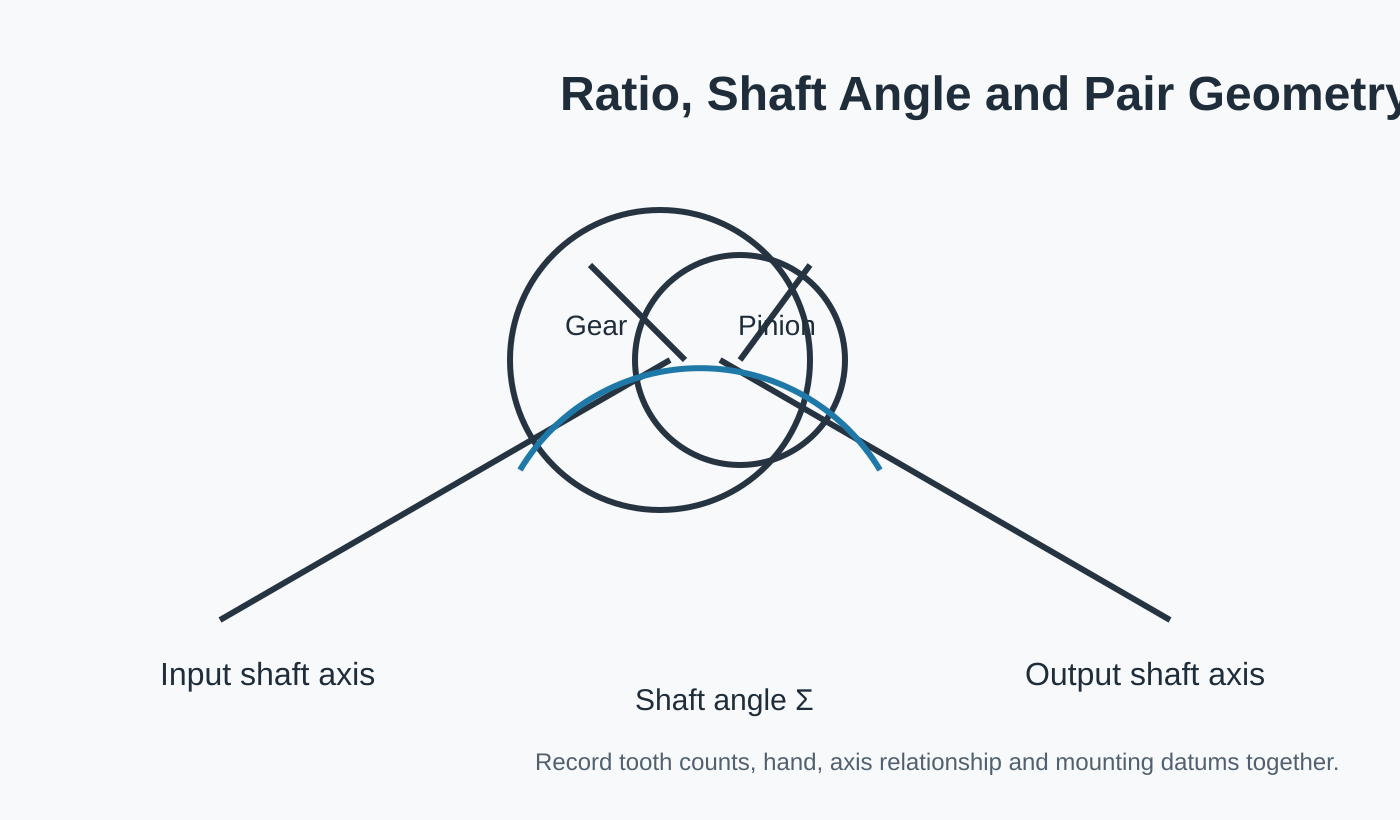
Identifique ambos miembros, el número de dientes o la proporción, la mano y qué componente acciona.
Indique el ángulo del eje, las referencias de montaje, las posiciones de los cojinetes y cualquier juego controlado.
Indique las inspecciones o comprobaciones de contacto que son importantes para la aprobación de la pieza para esta máquina.
| Área de revisión | Qué proporcionar | Por qué es importante |
|---|---|---|
| Movimiento / deber | Reversing frequency, acceleration, inertia, positional repeatability, shaft support and service interval | Separa la transmisión de potencia constante de la inversión de marcha, los golpes o las condiciones de funcionamiento sensibles a la posición. |
| Par de engranajes | Identidad del engranaje + piñón, relación/número de dientes y mano | Impide que se revise un componente sin su geometría correspondiente. |
| Montaje | Disposición del eje, soporte del cojinete, puntos de referencia de la carcasa y juego libre objetivo | Conecta la pieza fabricada con la posición que ocupará en el conjunto. |
| Ambiente | Contexto de lubricación, temperatura y contaminación | Permite realizar revisiones prácticas de materiales, acabados y servicios sin inventar afirmaciones a nivel de máquina. |
| Inspección | Tolerancias de dibujo, acabado de los dientes y registros requeridos | Define qué método utilizará el comprador para aceptar la configuración solicitada. |
Backlash that is acceptable in a continuous conveyor can be noticeable in a mechanism that changes direction repeatedly. Do not assume a generic backlash value; use the machine requirement and the mounting geometry that can actually maintain it.
Ground or custom pairs are a natural starting point for motion-sensitive mechanisms, while a miter set can suit compact 1:1 direction changes when the ratio and axis relationship are fixed.
If a robotic axis or automated positioning cell still has open geometry or duty inputs, mark those items for review. An explicit unknown is safer than filling the drawing with an assumed standard value.
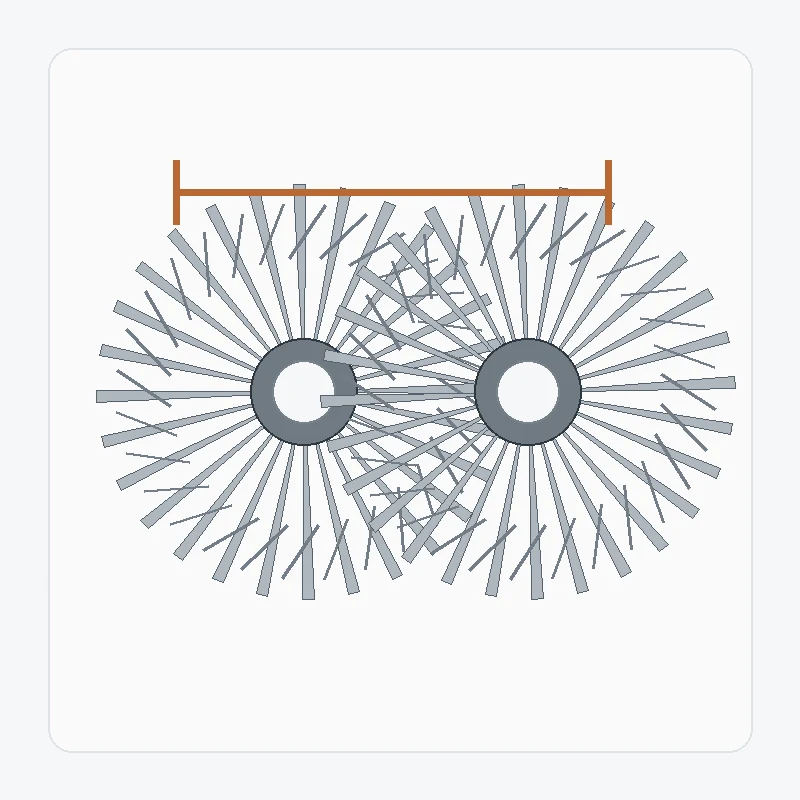
Replacement spiral bevel gear work begins by separating original design information from service wear. A damaged tooth, distorted bore or shifted contact pattern can describe the failure, but…
Ver configuración →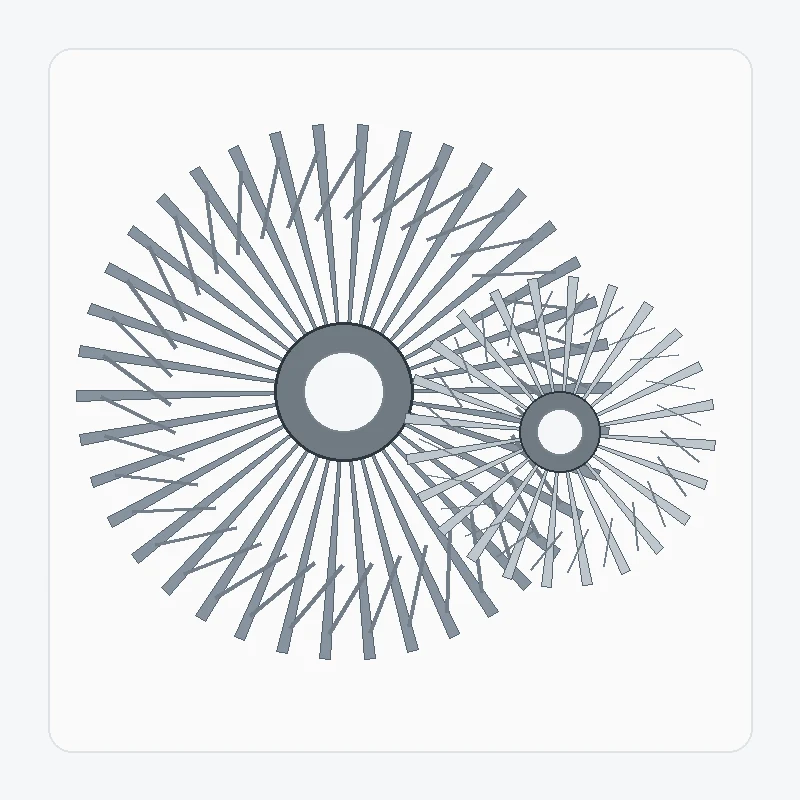
A heavy-duty spiral bevel gear pair should be reviewed from the complete operating duty. Peak load, continuous load, shock events, reversals, bearing support and lubrication can all matter…
Ver configuración →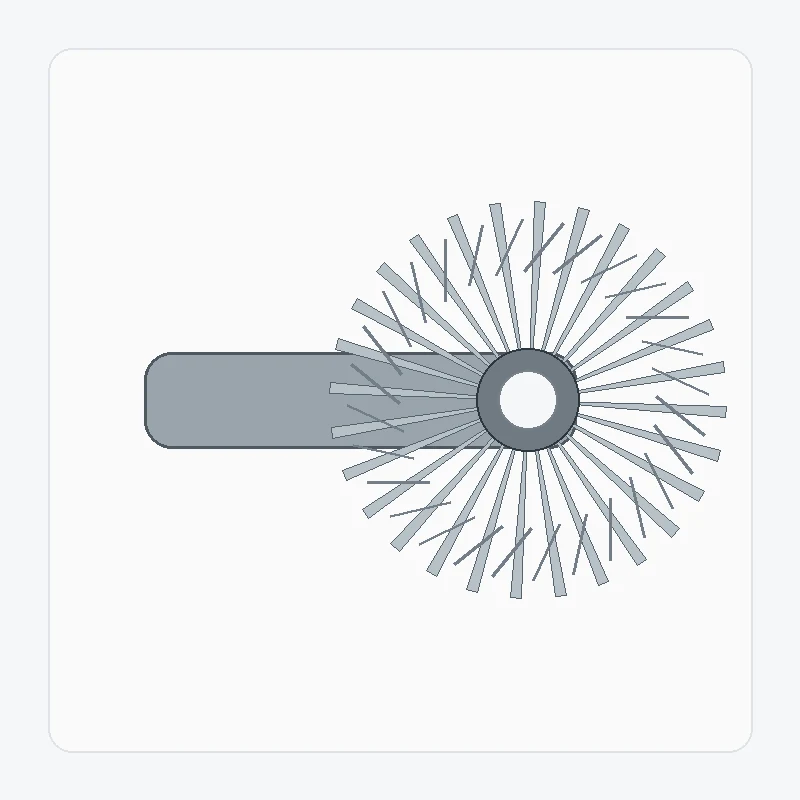
Integrating the spiral bevel pinion with a shaft reduces separate joints, but it makes bearing journals, shoulders, splines, threads and tooth datums part of one manufacturing problem. The…
Ver configuración →
A spiral miter gear set uses equal tooth counts to transmit motion between intersecting shafts without intentionally changing speed ratio. Equal ratio simplifies one part of the selection,…
Ver configuración →
Ground spiral bevel gears require more than adding a grinding operation to a normal gear. The datum scheme, pre-grind geometry, heat treatment, grinding allowance and final inspection have…
Ver configuración →
A custom spiral bevel gear set is built around project-specific geometry rather than a public stock table. The useful definition includes both members of the pair, the axis…
Ver configuración →When the robotic axis or automated positioning cell drawing controls material or heat treatment, include the exact requirement. If those choices remain open, describe the duty and leave material/process selection for review.
Photos of the robotic axis or automated positioning cell help establish orientation and condition, but they do not define tooth geometry or mounting datums. Add the mating member, drawing data and measurements taken from controlled assembly references.
For the robotic axis or automated positioning cell, send the assembly information that controls shaft relationship, mounting datums and interfaces. Unrelated machine details can be omitted when they have no effect on gear selection or inspection.
For the robotic axis or automated positioning cell, separate prototype/sample quantity from expected repeat demand. This keeps tooling, inspection and production planning tied to the real purchasing stage.
Cuanto más claramente se definan la relación de acoplamiento y los datos de ensamblaje, más rápido se podrá revisar la configuración.
La cantidad mínima de pedido (MOQ) es flexible según el tipo de producto, el proceso de fabricación y el valor total del pedido. Los proyectos nuevos que cumplan con los requisitos pueden solicitar de 1 a 5 muestras a precio de muestra. Se pueden combinar diferentes modelos cuando el total del pedido alcance aproximadamente los 1500 USD. Se pueden revisar los pedidos de 1 a 2 unidades, aunque el costo unitario suele ser mayor.
Los plazos de planificación habituales son de 10 a 25 días hábiles para piezas estándar, de 20 a 45 días hábiles para componentes personalizados y de 45 a 120 días hábiles para equipos o conjuntos de tipo proyecto. Se suelen aceptar los términos EXW, FOB, CIF y DAP; para el envío, se pueden considerar FCA, CFR, CPT, CIP y DDP.