
Praca maszyny
Explain reversing frequency, acceleration, inertia, positional repeatability, shaft support and service interval. These inputs help the quotation reflect the actual machine rather than an industry label.
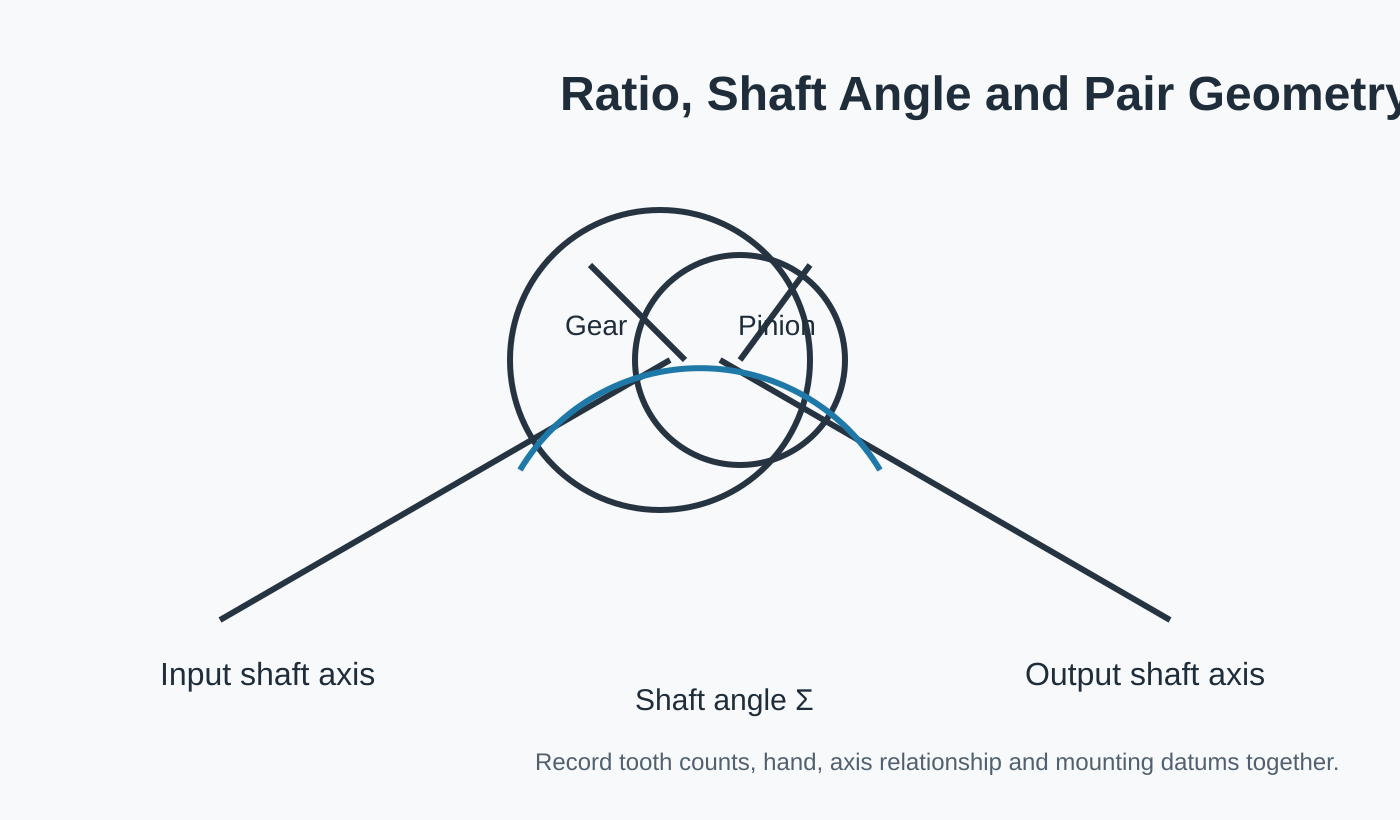
Automation systems use intersecting-axis drives where packaging is tight and motion may reverse frequently. The gear pair must be considered together with inertia, bearing support, commanded motion and maintenance access.

In automated equipment, the gear set rarely works alone. Motor, coupling, bearings, shafts and the downstream mechanism all influence how reversal and torque are seen at the teeth. A useful RFQ describes that motion profile instead of treating the gear as a static catalogue item.
If the gear is part of a servo-driven mechanism, explain whether the downstream process depends on repeatable angular position or simply on power transfer. That distinction changes which inspection results are useful to the buyer.

| Obszar przeglądu | Co zapewnić | Dlaczego to ważne |
|---|---|---|
| Wniosek / obowiązek | Reversing frequency, acceleration, inertia, positional repeatability, shaft support and service interval | Rozdziela stałe przenoszenie mocy od cofania, wstrząsów i pracy zależnej od położenia. |
| Para kół zębatych | Tożsamość koła zębatego i zębatki, stosunek/liczba zębów i wskazówki | Zapobiega przeglądaniu jednego komponentu bez odpowiadającej mu geometrii. |
| Montowanie | Układ wału, podparcie łożyska, punkty odniesienia obudowy i luz docelowy | Łączy wyprodukowaną część z pozycją, w której będzie ona umieszczona w zespole. |
| Środowisko | Kontekst smarowania, temperatury i zanieczyszczeń | Umożliwia praktyczną ocenę materiałów, wykończenia i serwisu bez konieczności tworzenia roszczeń na poziomie maszyny. |
| Kontrola | Tolerancje rysunkowe, wykończenie zębów i wymagana dokumentacja | Definiuje, co kupujący użyje do zaakceptowania zamówionej konfiguracji. |
Backlash that is acceptable in a continuous conveyor can be noticeable in a mechanism that changes direction repeatedly. Do not assume a generic backlash value; use the machine requirement and the mounting geometry that can actually maintain it.
Ground or custom pairs are a natural starting point for motion-sensitive mechanisms, while a miter set can suit compact 1:1 direction changes when the ratio and axis relationship are fixed.
If a robotic axis or automated positioning cell still has open geometry or duty inputs, mark those items for review. An explicit unknown is safer than filling the drawing with an assumed standard value.


Replacement spiral bevel gear work begins by separating original design information from service wear. A damaged tooth, distorted bore or shifted contact pattern can describe the failure, but…
Wyświetl konfigurację →
A heavy-duty spiral bevel gear pair should be reviewed from the complete operating duty. Peak load, continuous load, shock events, reversals, bearing support and lubrication can all matter…
Wyświetl konfigurację →
Integrating the spiral bevel pinion with a shaft reduces separate joints, but it makes bearing journals, shoulders, splines, threads and tooth datums part of one manufacturing problem. The…
Wyświetl konfigurację →
A spiral miter gear set uses equal tooth counts to transmit motion between intersecting shafts without intentionally changing speed ratio. Equal ratio simplifies one part of the selection,…
Wyświetl konfigurację →
Ground spiral bevel gears require more than adding a grinding operation to a normal gear. The datum scheme, pre-grind geometry, heat treatment, grinding allowance and final inspection have…
Wyświetl konfigurację →
A custom spiral bevel gear set is built around project-specific geometry rather than a public stock table. The useful definition includes both members of the pair, the axis…
Wyświetl konfigurację →When the robotic axis or automated positioning cell drawing controls material or heat treatment, include the exact requirement. If those choices remain open, describe the duty and leave material/process selection for review.
Photos of the robotic axis or automated positioning cell help establish orientation and condition, but they do not define tooth geometry or mounting datums. Add the mating member, drawing data and measurements taken from controlled assembly references.
For the robotic axis or automated positioning cell, send the assembly information that controls shaft relationship, mounting datums and interfaces. Unrelated machine details can be omitted when they have no effect on gear selection or inspection.
For the robotic axis or automated positioning cell, separate prototype/sample quantity from expected repeat demand. This keeps tooling, inspection and production planning tied to the real purchasing stage.
Im wyraźniej określone są relacje dopasowania i dane montażowe, tym szybciej można przejrzeć konfigurację.
Minimalne zamówienie (MOQ) jest elastyczne w zależności od rodzaju produktu, metody produkcji i całkowitej wartości zamówienia. Nowe projekty mogą wymagać dostarczenia 1–5 sztuk próbek w cenie próbnej. Modele mieszane można łączyć, gdy łączna wartość zamówienia osiągnie około 1500 USD. Zamówienia obejmujące 1–2 sztuki mogą być weryfikowane, chociaż koszt jednostkowy jest zazwyczaj wyższy.
Typowe okna planowania to 10–25 dni roboczych dla części standardowych, 20–45 dni roboczych dla komponentów niestandardowych i 45–120 dni roboczych dla urządzeń lub zespołów projektowych. Najczęściej obsługiwane są warunki dostawy EXW, FOB, CIF i DAP; w przypadku wysyłki można omówić warunki FCA, CFR, CPT, CIP i DDP.