
Tugas mesin
Jelaskan akselerasi/deselerasi, laju siklus, sensitivitas celah, kekakuan pemasangan, pengendalian kontaminasi, dan pelumasan. Masukan ini membantu penawaran harga mencerminkan mesin yang sebenarnya, bukan sekadar label industri.
Peralatan gantry dan laser dapat menggabungkan siklus cepat dengan persyaratan pemosisian dan kontaminasi dari lingkungan kerja. Transmisi sudut siku-siku harus ditinjau dengan kekakuan pemasangannya, profil akselerasi, dan strategi perlindungannya.

Penggerak gantry mungkin mengalami start, stop, dan pembalikan berulang. Bahkan ketika torsi rata-rata moderat, peristiwa transien dan kemampuan struktur pendukung untuk menahan pasangan tersebut pada posisinya dapat memengaruhi perilaku operasional. Tunjukkan susunan bantalan dan rumah bantalan ketika celah atau posisi penting.
Untuk pekerjaan modifikasi, ukur susunan pemasangan yang ada sebelum mengganti bantalan atau bagian rumah. Jika tidak, pasangan roda gigi baru dapat diminta untuk mengkompensasi perubahan posisi perakitan yang bukan bagian dari desain asli.
Jelaskan akselerasi/deselerasi, laju siklus, sensitivitas celah, kekakuan pemasangan, pengendalian kontaminasi, dan pelumasan. Masukan ini membantu penawaran harga mencerminkan mesin yang sebenarnya, bukan sekadar label industri.
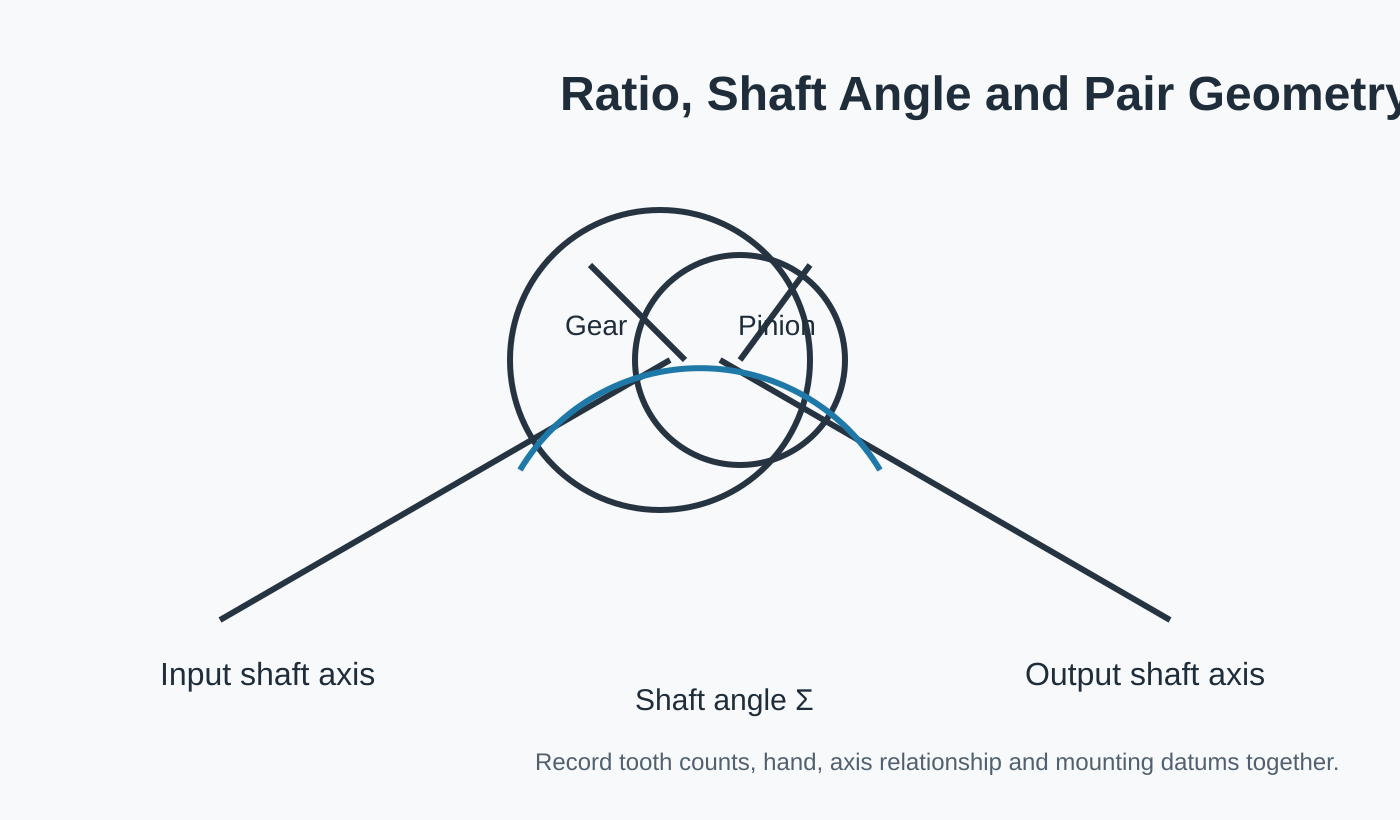
Identifikasi kedua anggota, jumlah atau rasio gigi, arah putaran, dan komponen mana yang menggerakkannya.
Tunjukkan sudut poros, referensi pemasangan, posisi bantalan, dan celah bebas terkontrol.
Sebutkan inspeksi atau pengecekan kontak yang penting untuk melepaskan suku cadang untuk mesin ini.
| Area ulasan | Apa yang perlu disediakan | Mengapa ini penting |
|---|---|---|
| Gerakan / tugas | Akselerasi/deselerasi, laju siklus, sensitivitas celah, kekakuan pemasangan, pengendalian kontaminasi, dan pelumasan. | Memisahkan transmisi daya tetap dari tugas pembalikan arah, guncangan, atau yang sensitif terhadap posisi. |
| Pasangan perlengkapan | Identitas roda gigi + pinion, rasio/jumlah gigi, dan arah putaran. | Mencegah satu komponen diperiksa tanpa geometri pasangannya. |
| Pemasangan | Susunan poros, penyangga bantalan, acuan rumah bantalan, dan target celah balik. | Menghubungkan bagian yang diproduksi ke posisi yang akan ditempatinya dalam perakitan. |
| Lingkungan | Konteks pelumasan, suhu, dan kontaminasi | Mendukung tinjauan praktis terhadap material, hasil akhir, dan layanan tanpa membuat klaim yang berlebihan pada tingkat mesin. |
| Inspeksi | Toleransi gambar, penyelesaian gigi, dan catatan yang diperlukan. | Menentukan apa yang akan digunakan pembeli untuk menerima konfigurasi yang dipesan. |
Debu, partikel halus, atau kontaminasi proses dapat membuat keputusan pelumasan dan penyegelan menjadi bagian dari tinjauan aplikasi. Penawaran harga untuk roda gigi tidak boleh mengklaim tingkat perlindungan yang berlaku untuk seluruh mesin; sebaliknya, nyatakan lingkungan aktual dan rencana penutup atau pelumasan.
Set roda gigi standar atau khusus dapat ditinjau untuk sumbu yang sensitif terhadap posisi. Poros pinion dapat berguna di mana penggerak sudut siku-siku harus sesuai dengan tata letak yang ringkas dan didukung bantalan.
Jika mesin pemotong laser atau penggerak gantry masih memiliki geometri atau input tugas yang belum ditentukan, tandai item tersebut untuk ditinjau. Menentukan nilai yang tidak diketahui secara eksplisit lebih aman daripada mengisi gambar dengan nilai standar yang diasumsikan.
Pekerjaan penggantian roda gigi bevel spiral dimulai dengan memisahkan informasi desain asli dari keausan akibat pemakaian. Gigi yang rusak, lubang yang terdistorsi, atau pola kontak yang bergeser dapat menggambarkan kegagalan tersebut, tetapi…
Lihat konfigurasi →
Sepasang roda gigi bevel spiral tugas berat harus ditinjau dari keseluruhan beban operasinya. Beban puncak, beban kontinu, kejadian kejut, pembalikan arah putaran, dukungan bantalan, dan pelumasan semuanya penting…
Lihat konfigurasi →
Mengintegrasikan roda gigi pinion bevel spiral dengan poros mengurangi sambungan terpisah, tetapi hal itu membuat jurnal bantalan, bahu, alur, ulir, dan acuan gigi menjadi bagian dari satu masalah manufaktur. ...
Lihat konfigurasi →
Satu set roda gigi miter spiral menggunakan jumlah gigi yang sama untuk mentransmisikan gerakan antara poros yang berpotongan tanpa sengaja mengubah rasio kecepatan. Rasio yang sama menyederhanakan salah satu bagian dari pemilihan,…
Lihat konfigurasi →
Roda gigi bevel spiral yang dihaluskan membutuhkan lebih dari sekadar menambahkan operasi penggerindaan pada roda gigi biasa. Skema acuan, geometri pra-penggerindaan, perlakuan panas, toleransi penggerindaan, dan inspeksi akhir memiliki…
Lihat konfigurasi →
Satu set roda gigi bevel spiral kustom dibuat berdasarkan geometri spesifik proyek, bukan tabel standar yang tersedia di pasaran. Definisi yang berguna mencakup kedua anggota pasangan tersebut, yaitu sumbu…
Lihat konfigurasi →Jika gambar pemotongan laser atau penggerak gantry mengontrol material atau perlakuan panas, sertakan persyaratan yang tepat. Jika pilihan tersebut masih terbuka, jelaskan tugasnya dan serahkan pemilihan material/proses untuk ditinjau.
Foto-foto pemotongan laser atau penggerak gantry membantu menentukan orientasi dan kondisi, tetapi tidak menentukan geometri gigi atau titik acuan pemasangan. Tambahkan anggota pasangannya, data gambar, dan pengukuran yang diambil dari referensi perakitan terkontrol.
Untuk pemotongan laser atau penggerak gantry, kirimkan informasi perakitan yang mengontrol hubungan poros, titik acuan pemasangan, dan antarmuka. Detail mesin yang tidak terkait dapat dihilangkan jika tidak berpengaruh pada pemilihan roda gigi atau inspeksi.
Untuk pemotongan laser atau penggerak gantry, pisahkan jumlah prototipe/sampel dari perkiraan permintaan berulang. Hal ini menjaga agar peralatan, inspeksi, dan perencanaan produksi tetap terkait dengan tahap pembelian sebenarnya.
Semakin jelas hubungan pemasangan dan data perakitan didefinisikan, semakin cepat konfigurasi dapat ditinjau.
Jumlah pesanan minimum (MOQ) bersifat fleksibel tergantung jenis produk, jalur produksi, dan total nilai pesanan. Proyek baru yang sesuai dapat meminta 1–5 sampel dengan harga sampel. Model campuran dapat dikombinasikan jika total pesanan mencapai sekitar USD 1.500. Pesanan 1–2 buah dapat dipertimbangkan, meskipun biaya per unit biasanya lebih tinggi.
Jangka waktu perencanaan tipikal adalah 10–25 hari kerja untuk suku cadang standar, 20–45 hari kerja untuk komponen yang disesuaikan, dan 45–120 hari kerja untuk peralatan atau rakitan tipe proyek. EXW, FOB, CIF, dan DAP umumnya didukung; FCA, CFR, CPT, CIP, dan DDP dapat didiskusikan untuk pengiriman.