รูปแบบการสัมผัสของฟันเฟืองสามารถเป็นข้อมูลที่เป็นประโยชน์ในการตรวจสอบว่าคู่เฟืองเกลียวประกบกันอย่างไร แต่ไม่ใช่การวินิจฉัยที่สมบูรณ์ในตัวเอง รูปแบบดังกล่าวขึ้นอยู่กับรูปทรงเรขาคณิตของคู่เฟือง ตำแหน่งการติดตั้ง แรงกด วิธีการตรวจสอบ และสภาพของตัวเรือนและแบริ่ง ดังนั้นบันทึกการตรวจสอบที่มีประโยชน์จึงควรระบุว่าได้มาซึ่งรูปแบบนั้นได้อย่างไร ไม่ใช่เพียงแค่ลักษณะที่ปรากฏเท่านั้น
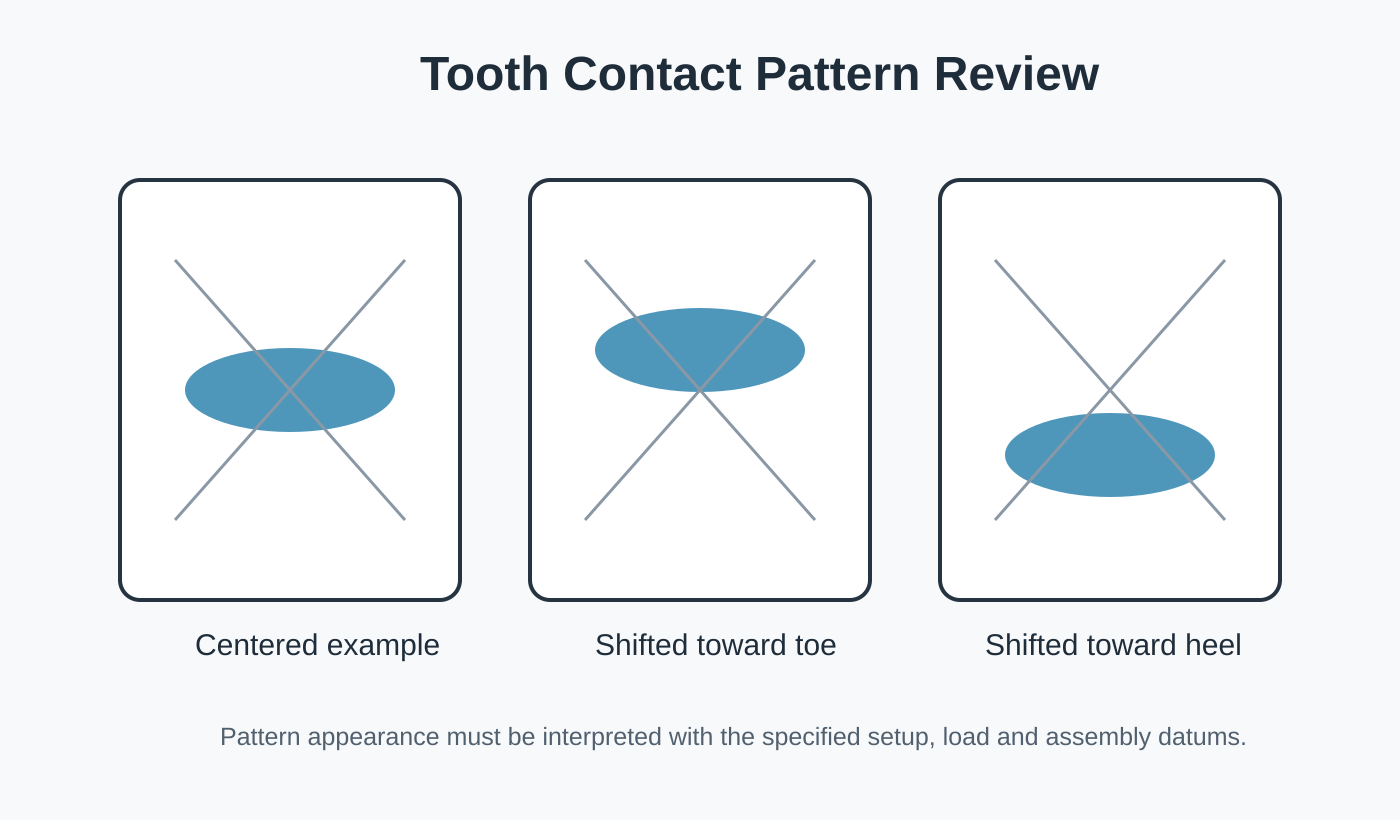
ควรหารือเกี่ยวกับตำแหน่งการสัมผัสร่วมกับเงื่อนไขการตรวจสอบ
รูปแบบที่ปรากฏอยู่ตรงกลางภายใต้การตรวจสอบด้วยน้ำหนักเบาแบบหนึ่ง อาจเคลื่อนที่ไปภายใต้ภาระการใช้งานหรือเมื่อตำแหน่งการติดตั้งเปลี่ยนแปลง การเลื่อนของปลาย/ส้น และหน้า/โคน อาจเป็นข้อสังเกตที่มีประโยชน์ แต่ควรตีความโดยพิจารณาจากแบบร่าง ระยะการติดตั้ง และขั้นตอนการตรวจสอบที่ระบุไว้
สิ่งนี้มีความสำคัญอย่างยิ่งในงานเปลี่ยนชิ้นส่วน เนื่องจากตลับลูกปืนที่สึกหรอหรือตัวเรือนที่บิดเบี้ยวอาจทำให้รูปแบบการทำงานเปลี่ยนแปลงไปโดยไม่ขึ้นอยู่กับรูปทรงเรขาคณิตของเฟืองใหม่
ข้อมูลที่จะบันทึกด้วยรูปแบบ
| บันทึก | ทำไมเรื่องนี้ถึงสำคัญ |
|---|---|
| สมาชิกคนไหนเป็นคนขับรถ | วิธีการติดต่อสื่อสารอาจแตกต่างกันไปขึ้นอยู่กับทิศทางการขับขี่ |
| ทิศทางการหมุน | การกลับทิศทางการใช้งานอาจทำให้เกิดแรงกดบนพื้นผิวฟันที่แตกต่างกัน |
| ตรวจสอบโหลด / วิธีการ | การตรวจสอบด้วยแสงและการทดสอบรูปแบบการรับน้ำหนักขณะใช้งานนั้นไม่ใช่สภาวะเดียวกัน |
| ตำแหน่งการติดตั้ง | ระยะห่างในการติดตั้ง แผ่นรองปรับระดับ และสภาพของลูกปืนมีผลต่อผลลัพธ์ |
| กระแสต่อต้าน | ควรบันทึกสถานะการประกอบไว้พร้อมกับการตรวจสอบการสัมผัส |
| เอกลักษณ์ของคู่ | ผลลัพธ์ที่ได้นั้นเกี่ยวข้องกับเฟืองและตัวขับเฟืองเฉพาะตัวที่กำลังตรวจสอบอยู่ |
ใช้การตรวจสอบการติดต่อเป็นส่วนหนึ่งของแผนการตรวจสอบที่ครอบคลุมยิ่งขึ้น
การตรวจสอบขนาดและคุณภาพของฟันเฟืองช่วยให้ผู้ซื้อทราบว่าชิ้นส่วนแต่ละชิ้นตรงตามข้อกำหนดที่ควบคุมไว้หรือไม่ การตรวจสอบการสัมผัสจะให้ข้อมูลเพิ่มเติมเกี่ยวกับวิธีการทำงานร่วมกันของชิ้นส่วนทั้งสองในระบบที่กำหนดไว้ การตรวจสอบทั้งสองอย่างจะมีประโยชน์มากขึ้นเมื่อมีการบันทึกข้อมูลอ้างอิงและข้อสมมติฐานในการประกอบไว้ตั้งแต่เริ่มต้น
รูปแบบไม่สามารถพิสูจน์อะไรได้ด้วยตัวมันเอง
รูปแบบการสัมผัสเพียงอย่างเดียวไม่สามารถพิสูจน์วัสดุ การอบชุบความร้อน ความแม่นยำของฟัน สภาพของแบริ่ง หรือประสิทธิภาพในระยะยาวได้ ไม่ควรนำไปใช้เปลี่ยนตัวอย่างทดแทนที่ไม่ทราบที่มาให้เป็นข้ออ้างทางเทคนิคที่แน่นอน ควรใช้เป็นเพียงหลักฐานชิ้นหนึ่งในการตรวจสอบคู่ชิ้นส่วนและชุดประกอบอย่างเป็นระบบ
รายการตรวจสอบการทบทวนสัญญาที่ใช้งานได้จริง
ก่อนเปรียบเทียบรูปแบบ โปรดตรวจสอบให้แน่ใจว่าได้ใช้คู่เฟืองเดียวกัน ทิศทางการหมุน ตำแหน่งการติดตั้ง ระยะห่างระหว่างฟันเฟือง และวิธีการตรวจสอบที่เหมือนกัน ถ่ายภาพฟันเฟืองที่ทำเครื่องหมายไว้โดยมีบริบทเพียงพอที่จะระบุเฟืองและทิศทาง หากมีการปรับแต่งใด ๆ ให้บันทึกสิ่งที่เปลี่ยนแปลงก่อนถ่ายภาพถัดไป
ลำดับดังกล่าวจะเปลี่ยนรูปแบบให้กลายเป็นบันทึกการตรวจสอบที่มีประโยชน์ หากไม่มีข้อมูลการตั้งค่า ภาพสองภาพอาจดูแตกต่างกันด้วยเหตุผลที่ไม่ได้เกี่ยวข้องกับการผลิตฟันเลย
คำถามที่ผู้ซื้อมักถาม
รูปแบบที่จัดวางอยู่ตรงกลางนั้นถูกต้องเสมอหรือไม่?
ไม่ใช่โดยตัวมันเอง ตำแหน่งที่ยอมรับได้ขึ้นอยู่กับการออกแบบ วิธีการตรวจสอบ และเงื่อนไขที่ระบุไว้ ควรใช้ข้อกำหนดการตรวจสอบโครงการแทนที่จะใช้รูปถ่ายทั่วไป
รูปแบบการสัมผัสสามารถวินิจฉัยปัญหาตลับลูกปืนเสียได้หรือไม่?
อาจแสดงให้เห็นว่าตำแหน่งของคู่เฟืองมีการเปลี่ยนแปลง แต่ไม่ได้ระบุสาเหตุโดยตรง จำเป็นต้องตรวจสอบสภาพของตลับลูกปืน ตัวเรือน การติดตั้ง และรูปทรงเรขาคณิตของเฟืองร่วมกัน
ควรเพิ่มการตรวจสอบข้อมูลติดต่อในทุกคำสั่งซื้อหรือไม่?
ควรระบุการทดสอบเมื่อเป็นส่วนหนึ่งของแบบร่าง แผนการยอมรับ หรือข้อกำหนดของโครงการ อย่าเพิ่มการทดสอบเพียงเพื่อเป็นการตกแต่งหากการทดสอบนั้นไม่ได้ช่วยให้ผู้ซื้ออนุมัติชิ้นส่วนได้
ส่งข้อมูลชุดเกียร์ ภาพวาด และหน้าที่การใช้งานในเอกสารขอใบเสนอราคาฉบับเดียว
ยิ่งกำหนดความสัมพันธ์ในการผสมพันธุ์และข้อมูลการประกอบได้ชัดเจนมากเท่าไร การตรวจสอบการกำหนดค่าก็จะยิ่งเร็วขึ้นเท่านั้น
คำแนะนำในการสั่งซื้อและการจัดส่ง
ปริมาณสั่งซื้อขั้นต่ำ (MOQ) สามารถยืดหยุ่นได้ตามประเภทผลิตภัณฑ์ กระบวนการผลิต และมูลค่าการสั่งซื้อรวม โครงการใหม่ที่เหมาะสมอาจขอตัวอย่าง 1-5 ชิ้นในราคาตัวอย่าง สามารถรวมรุ่นต่างๆ ได้เมื่อมูลค่าการสั่งซื้อรวมประมาณ 1,500 ดอลลาร์สหรัฐ การสั่งซื้อ 1-2 ชิ้นสามารถพิจารณาได้ แม้ว่าต้นทุนต่อหน่วยโดยปกติจะสูงกว่าก็ตาม
โดยทั่วไป ระยะเวลาวางแผนจะอยู่ที่ 10–25 วันทำการสำหรับชิ้นส่วนมาตรฐาน 20–45 วันทำการสำหรับชิ้นส่วนที่ปรับแต่งตามความต้องการ และ 45–120 วันทำการสำหรับอุปกรณ์หรือชุดประกอบประเภทโครงการ เงื่อนไขการจัดส่งที่ใช้กันทั่วไป ได้แก่ EXW, FOB, CIF และ DAP ส่วน FCA, CFR, CPT, CIP และ DDP สามารถพูดคุยกันได้สำหรับการจัดส่งแบบอื่น