Jarak pemasangan dan celah (backlash) menghubungkan geometri roda gigi dengan rumah, bantalan, dan susunan poros. Keduanya bukanlah angka independen yang dapat disalin dari roda gigi yang tampak serupa. Permintaan Penawaran (RFQ) yang berguna mendefinisikan di mana setiap nilai diukur dan permukaan perakitan mana yang menahan pasangan tersebut pada posisi tersebut.
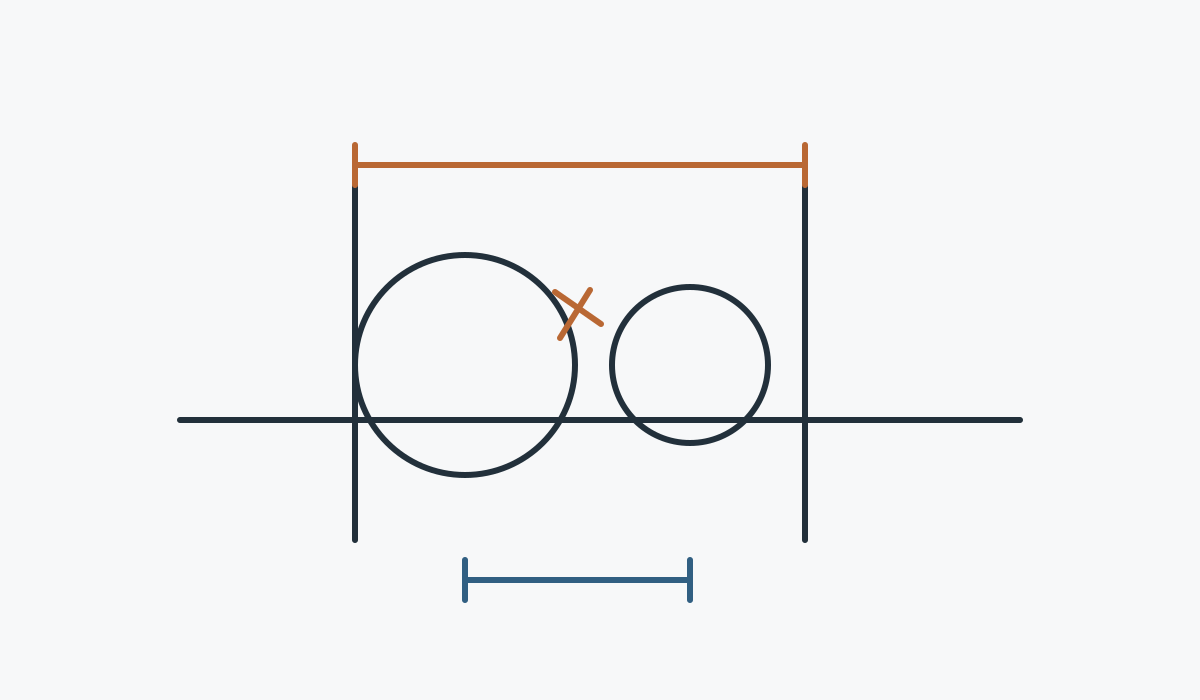
Jarak pemasangan membutuhkan acuan yang sebenarnya.
Suatu nilai hanya berguna ketika permukaan referensi, bahu, sumbu, atau fitur rumah telah ditentukan. Cantumkan datum tersebut pada gambar. Jika proyek tersebut merupakan penggantian, catat perakitan sebelum roda gigi dan bantalan lama dilepas.
Jika terdapat beberapa permukaan yang dapat digunakan sebagai referensi, identifikasi permukaan yang benar-benar mengontrol posisi saat digunakan, bukan permukaan yang paling mudah dijangkau dengan jangka sorong.
Mengapa reaksi negatif merupakan hasil dari sebuah proses pengambilan keputusan?
Kelonggaran (backlash) dipengaruhi oleh geometri roda gigi dan posisi kedua komponen. Dudukan bantalan, shim, bahu, dan toleransi rumah bantalan semuanya berkontribusi. Jika mesin menentukan rentang kelonggaran, sertakan persyaratan tersebut dan jelaskan kondisi perakitan di mana hal itu diperiksa.
Untuk mekanisme presisi atau pembalikan, pembeli mungkin juga memperhatikan pengulangan setelah pembalikan. Hal itu harus dijelaskan sebagai persyaratan aplikasi, bukan disembunyikan di dalam permintaan yang samar-samar untuk "kelonggaran minimum".
Apa yang perlu diukur selama pekerjaan penggantian?
| Area pengukuran | Rekaman yang direkomendasikan |
|---|---|
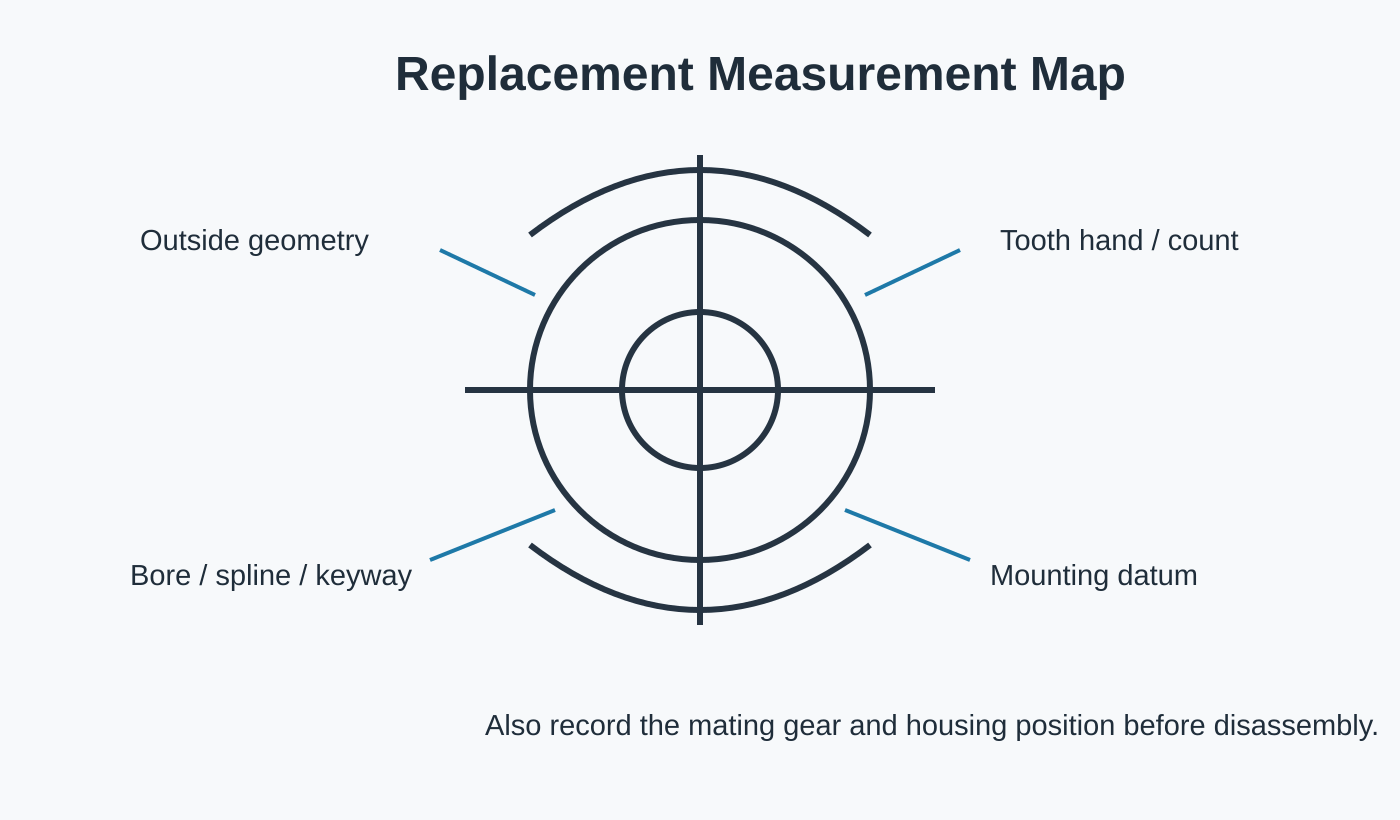
| Posisi roda gigi | Jarak dari permukaan/bahu pemasangan yang ditentukan ke referensi roda gigi yang relevan. |
| Penopang poros | Lokasi bantalan, bahu, dan shim apa pun yang menentukan posisi aksial. |
| Perlengkapan kawin | Jumlah gigi, tangan, antarmuka lubang/poros, dan orientasi pemasangan. |
| Reaksi | Rentang terukur dan metode/kondisi perakitan yang digunakan untuk memperolehnya |
| Perumahan | Jarak kritis antara referensi poros atau bantalan |
| Kondisi | Keausan, kelonggaran, atau kerusakan yang mungkin telah mengubah posisi pengukuran. |
Jangan gunakan keausan sebagai acuan.
Permukaan dorong yang aus, bantalan yang rusak, atau poros yang longgar dapat mengubah posisi roda gigi yang tampak. Perhatikan kondisi rakitan dan pisahkan pengukuran "sebagaimana adanya" dari referensi desain yang dimaksud. Gambar lama atau komponen pasangannya yang tidak rusak dapat membantu merekonstruksi posisi aslinya.
Rumusan RFQ yang mengurangi ambiguitas
Sebutkan jarak pemasangan beserta referensinya, target celah (backlash) beserta kondisi pengecekannya, dan apakah susunan rumah/bantalan akan tetap tidak berubah. Jika penyesuaian tersedia melalui shim atau mekanisme lain, jelaskan rentang yang tersedia. Informasi tersebut memungkinkan pemasok untuk memahami apakah geometri roda gigi harus mencapai satu posisi tetap atau dipasang dalam sistem yang dapat disesuaikan.
Pemasangan tetap versus pemasangan yang dapat disesuaikan
Beberapa rakitan menempatkan pasangan tersebut dengan bahu tetap dan dudukan bantalan; yang lain menggunakan shim atau metode penyesuaian lainnya. Sebutkan susunan mana yang Anda miliki. Pada rumah tetap, geometri penggantian memiliki kebebasan yang lebih sedikit untuk mengkompensasi posisi yang salah. Pada rakitan yang dapat disesuaikan, rentang yang tersedia harus didokumentasikan sehingga prosedur pemasangan dan target celah dapat dipahami bersama.
Jangan menyembunyikan dimensi rumah yang tidak diketahui di balik rentang celah yang lebar. Pemasok tetap membutuhkan geometri yang menentukan posisi yang diinginkan.
Pertanyaan yang sering diajukan pembeli
Apakah backlash dapat diatur setelah pemasangan?
Terkadang, rakitan tersebut menyediakan metode penyesuaian, tetapi itu bergantung pada susunan rumah dan bantalan yang sebenarnya. Sebutkan penyesuaian yang tersedia dan kondisi pemeriksaan yang ditargetkan.
Apakah jarak pemasangan sama dengan panjang keseluruhan roda gigi?
Tidak. Jarak pemasangan terikat pada referensi roda gigi/rakitan yang telah ditentukan. Panjang keseluruhan mungkin berguna untuk pengemasan, tetapi dengan sendirinya tidak menentukan posisi kerja.
Apakah saya perlu mengukur komponen yang aus sebelum mengganti bantalan?
Ya. Catat kondisi awal terlebih dahulu, kemudian catat setiap perubahan bantalan atau shim secara terpisah agar posisi asli dan posisi yang telah diperbaiki tidak tercampur.
Kirimkan pasangan peralatan, gambar, dan spesifikasi tugas dalam satu RFQ (Request for Quotation).
Semakin jelas hubungan pemasangan dan data perakitan didefinisikan, semakin cepat konfigurasi dapat ditinjau.
Panduan pemesanan & pengiriman
Jumlah pesanan minimum (MOQ) bersifat fleksibel tergantung jenis produk, jalur produksi, dan total nilai pesanan. Proyek baru yang sesuai dapat meminta 1–5 sampel dengan harga sampel. Model campuran dapat dikombinasikan jika total pesanan mencapai sekitar USD 1.500. Pesanan 1–2 buah dapat dipertimbangkan, meskipun biaya per unit biasanya lebih tinggi.
Jangka waktu perencanaan tipikal adalah 10–25 hari kerja untuk suku cadang standar, 20–45 hari kerja untuk komponen yang disesuaikan, dan 45–120 hari kerja untuk peralatan atau rakitan tipe proyek. EXW, FOB, CIF, dan DAP umumnya didukung; FCA, CFR, CPT, CIP, dan DDP dapat didiskusikan untuk pengiriman.