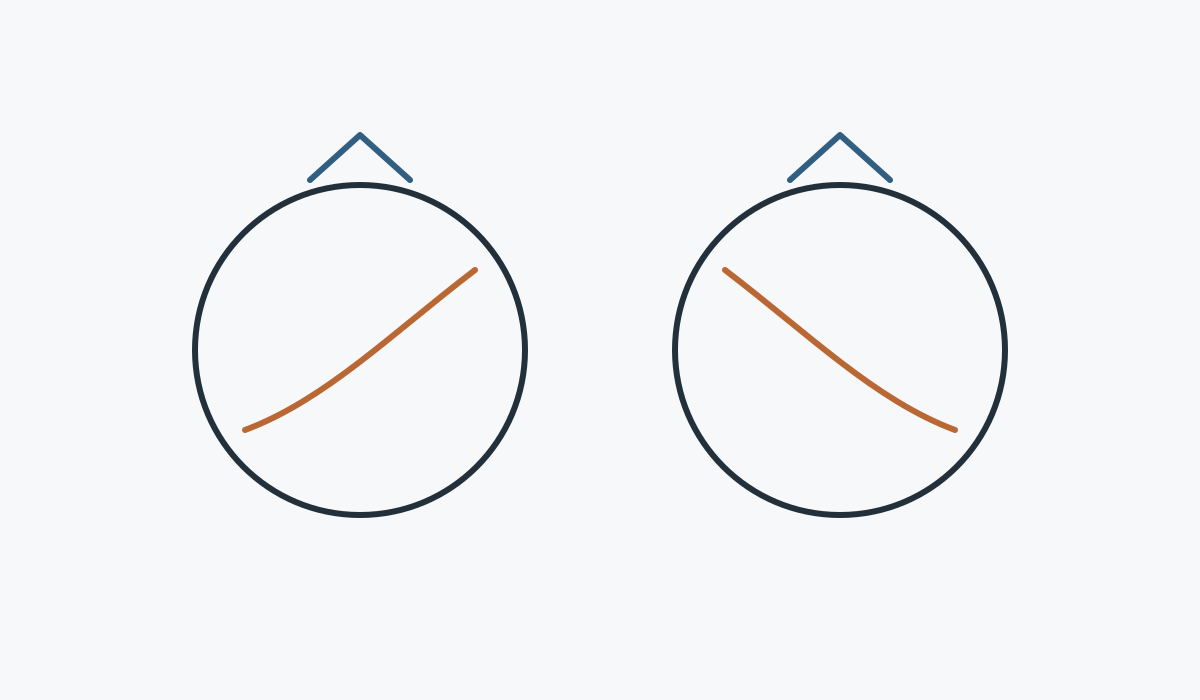
Las descripciones de mano derecha e izquierda forman parte de la relación de acoplamiento, no son etiquetas decorativas. Un par de biseles en espiral está diseñado para que ambos elementos encajen con la mano, la proporción, la relación del eje y la posición de montaje previstas. Cuando uno de estos elementos se registra sin una convención de visualización definida, una solicitud de cotización puede volverse ambigua rápidamente.
Registre la mano de ambos miembros con una dirección de visión definida.
Fotografie o dibuje el engranaje y el piñón desde un lado conocido e indique la dirección de visión. Si el dibujo original incluye una indicación de mano, conserve dicha indicación en la revisión del dibujo. Para trabajos de reemplazo, muestre ambas piezas juntas antes del desmontaje, si es posible.
El objetivo no es enseñar al proveedor una regla de nomenclatura genérica, sino lograr que sea imposible confundir su par específico.
La mano es solo una parte de la definición de par.
| Variable de par | Pregunta para responder |
|---|---|
| Dirección de la mano/espiral | ¿Cómo se designa a cada miembro y desde qué dirección de visión? |
| Relación / recuento de dientes | ¿Cuántos dientes tienen el engranaje y el piñón? |
| Ángulo del eje | ¿Cuál es el ángulo comprendido entre los dos ejes? |
| Posición de montaje | ¿Qué superficies o ejes sitúan cada elemento en la carcasa? |
| Reacción | ¿Existe un rango de funcionamiento o de montaje especificado? |
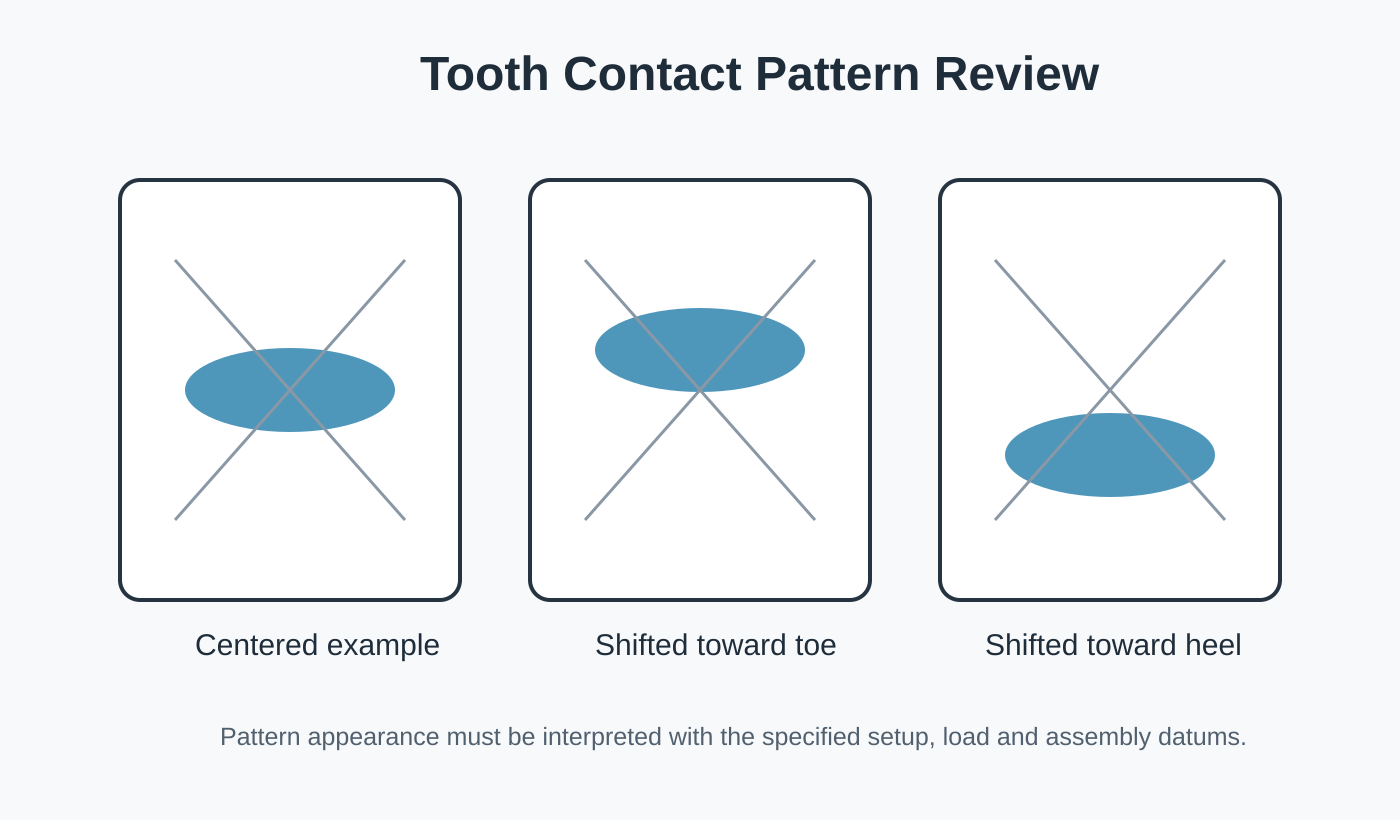
La rotación cambia qué superficies de los dientes soportan la carga.
La superficie de contacto activa depende del sentido de giro y del elemento motriz. Si la máquina invierte su sentido de giro de forma habitual, indíquelo en los datos de la aplicación. Esto puede influir en cómo el comprador desea que se inspeccione o evalúe el conjunto durante el montaje.
No deduzca la dirección de la carga a partir de una sola fotografía estática. Describa la dirección de funcionamiento o proporcione un esquema de montaje.
El trabajo de reemplazo requiere el engranaje correspondiente.
Un engranaje desgastado puede revelar el número de dientes y la mano, pero no revela automáticamente la geometría original completa. La pieza de acoplamiento, las dimensiones de la carcasa, un plano antiguo o una pieza de referencia sin usar pueden proporcionar información que el desgaste ha ocultado. Si solo se reemplaza un componente, su relación con el engranaje restante debe revisarse antes de la fabricación.
Qué enviar con la consulta
Incluya fotos de orientación claras, el número de dientes de ambos engranajes, cualquier número de pieza original, el ángulo del eje, el componente de acoplamiento y las referencias del dibujo o la carcasa utilizadas para ajustar la posición del engranaje. Marque los elementos desconocidos como desconocidos en lugar de asignarles un valor de montaje o de mano basándose únicamente en su apariencia.
Errores comunes en la identificación de manos
En las consultas sobre reemplazos, se repiten tres errores. El primero es etiquetar solo un miembro sin mostrar el otro. El segundo es indicar la mano desde una dirección de visualización indefinida. El tercero es asumir que la dirección de rotación define automáticamente la mano. Mantenga estos conceptos separados: registre la orientación del diente, muestre la dirección de visualización y luego describa la rotación operativa como información de la aplicación.
Cuando se proporcionen varias fotos, marque una como la de referencia y etiquete el engranaje y el piñón de forma consistente. Una simple anotación en la foto suele ser más útil que una larga descripción por correo electrónico.
Preguntas que suelen hacer los compradores
¿Se pueden intercambiar las marchas derecha e izquierda?
No des por sentado que pueden. El diseño se basa en una orientación dental y una relación de apareamiento específicas. Revisa ambos miembros y el dibujo antes de cambiar de mano.
¿Se necesita un par de engranajes diferente para invertir el sentido de giro?
No automáticamente. La inversión de la dirección cambia las superficies dentadas que soportan la carga, por lo que el ciclo de funcionamiento debe formar parte de la revisión de la aplicación.
¿Qué ocurre si falta la marca original de la mano?
Utilice la pareja física, una dirección de visualización definida, fotografías claras y cualquier plano anterior para establecer la orientación antes de que se apruebe el plano de reemplazo.
Envíe el par de engranajes, el plano y la capacidad de carga en una sola solicitud de cotización.
Cuanto más claramente se definan la relación de acoplamiento y los datos de ensamblaje, más rápido se podrá revisar la configuración.
Guía para realizar pedidos y entregas
La cantidad mínima de pedido (MOQ) es flexible según el tipo de producto, el proceso de fabricación y el valor total del pedido. Los proyectos nuevos que cumplan con los requisitos pueden solicitar de 1 a 5 muestras a precio de muestra. Se pueden combinar diferentes modelos cuando el total del pedido alcance aproximadamente los 1500 USD. Se pueden revisar los pedidos de 1 a 2 unidades, aunque el costo unitario suele ser mayor.
Los plazos de planificación habituales son de 10 a 25 días hábiles para piezas estándar, de 20 a 45 días hábiles para componentes personalizados y de 45 a 120 días hábiles para equipos o conjuntos de tipo proyecto. Se suelen aceptar los términos EXW, FOB, CIF y DAP; para el envío, se pueden considerar FCA, CFR, CPT, CIP y DDP.