"Geslepen" en "gesneden" beschrijven productieprocessen, geen simpele kwaliteitsrangschikking. De juiste keuze begint met de tekening, de toepassing en de acceptatie-eisen. Als een geslepen tandafwerking is gespecificeerd, moeten warmtebehandeling, referentiepuntbescherming, slijptoeslag en eindinspectie vanaf het begin op dat proces worden afgestemd.
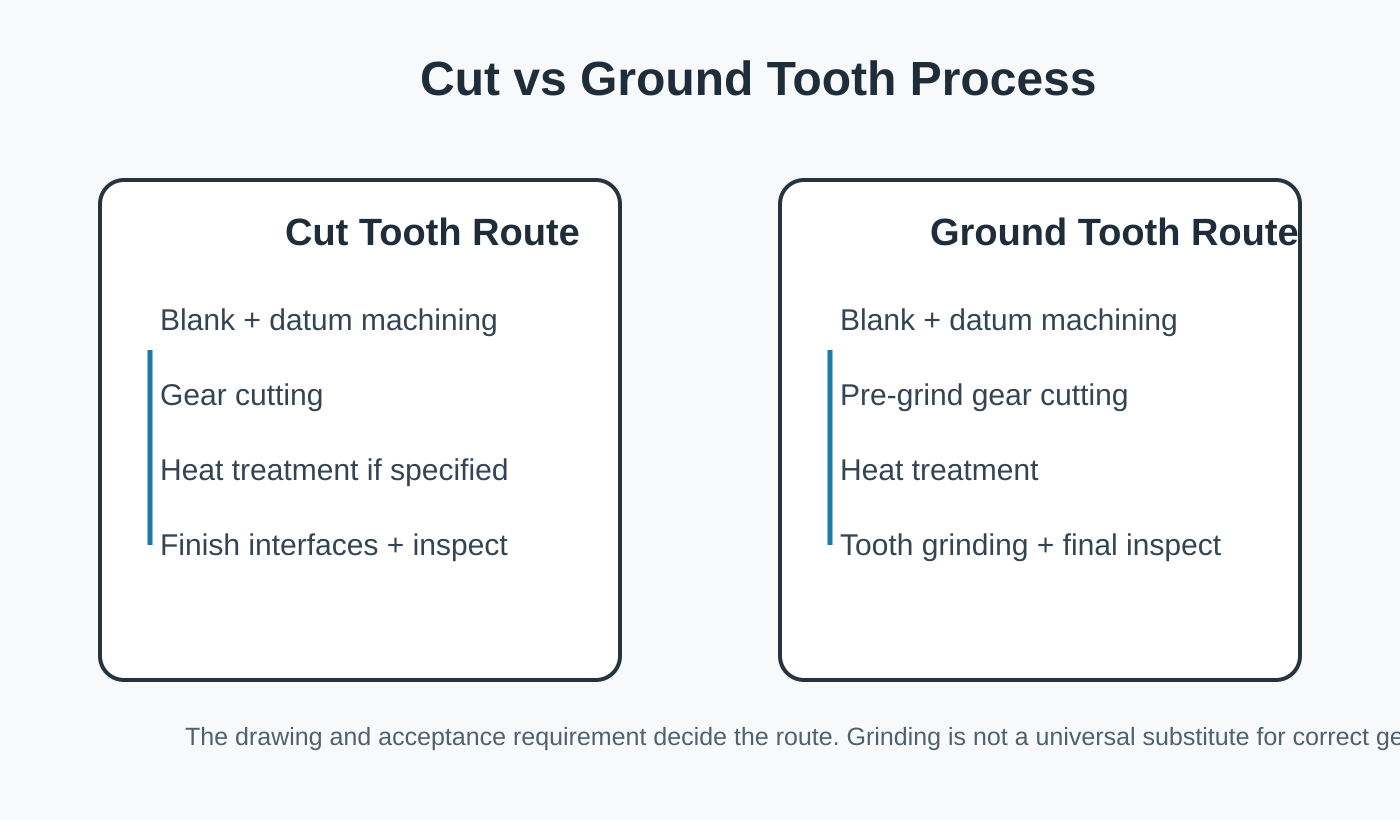
Het proces loopt uiteen vóór de laatste bewerking.
Een tandwiel met gesneden tanden kan worden afgewerkt volgens de voorgeschreven snij- en warmtebehandelingsprocedure, zonder dat een laatste slijpstap nodig is. Een tandwiel met geslepen tanden vereist normaal gesproken een gecontroleerde voorslijpconditie en stabiele referentiepunten die de warmtebehandeling doorstaan, zodat het tandoppervlak daarna kan worden afgewerkt.
Dat verschil heeft gevolgen voor de planning, de kosten en de inspectie. Het moet daarom in de offerteaanvraag worden vermeld, in plaats van achteraf te worden toegevoegd nadat een offerte al op een andere route is gebaseerd.
Welke wijzigingen zijn er in de offerteaanvraag?
| Offerteaanvraaggebied | Cut-tooth route | Grondtandroute |
|---|---|---|
| Tandafwerking | Geef de vereiste snijafwerking en kwaliteits-/inspectiecriteria aan. | Geef de vereisten voor de geslepen tanden en de kwaliteits-/inspectiecriteria voor het eindproduct aan. |
| Warmtebehandeling | Specificeer indien vereist door het ontwerp. | Stem de warmtebehandeling af op de slijptoeslag en de referentiebescherming. |
| Datums | Nodig voor het snijden van tandwielen en interface-inspectie. | Nodig vóór de warmtebehandeling en opnieuw voor het uiteindelijke slijpen/inspecteren. |
| Inspectie | Maatvoering- en tandgerelateerde controles van de tekening | Eindcontrole van de tanden en de interface na het slijpproces. |
| Commerciële impact | Over het algemeen de eenvoudigere route, indien technisch geschikt. | Aanvullende afwerkings- en inspectiestappen moeten vanaf de eerste offerte worden opgenomen. |
Slijpen corrigeert geen ongedefinieerde samenstelling.
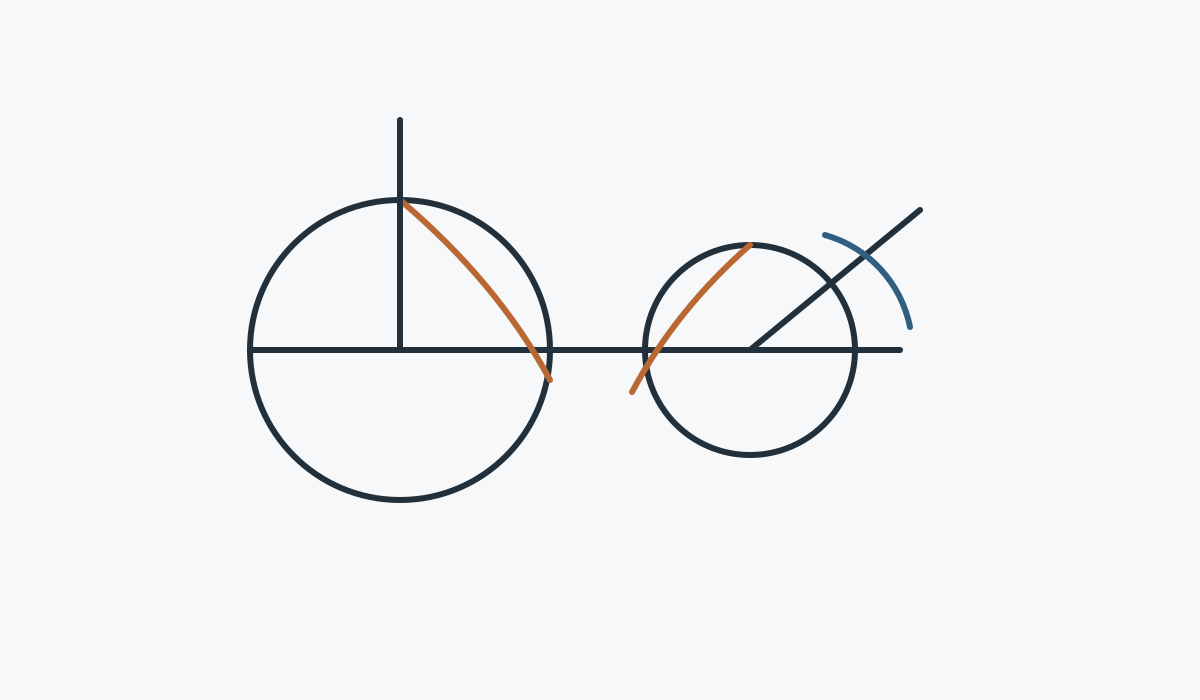
Een nauwkeurig afgewerkt tandoppervlak vereist nog steeds de juiste geometrie en montagepositie. Als de ashoek, de draairichting of de montageafstand niet klopt, zorgt een geslepen afwerking er niet voor dat het paar compatibel is. De producttekening en de montageverhouding blijven de belangrijkste factoren.
Wanneer moet je vragen om een geslepen tandafwerking?
Gebruik de slijpmethode wanneer de tekening, de prestatie-eisen of het gecontroleerde productieproces dit vereisen. Vermijd het specificeren van slijpen alleen omdat het preciezer klinkt. De relevante vraag is of de machine een afgewerkte tandconditie en inspectieniveau nodig heeft dat de gekozen methode rechtvaardigt.
Als de behoefte nog openstaat, beschrijf dan de taak, de positioneringsgevoeligheid, de verwachte service en de inspectiebehoeften, zodat het proces kan worden herzien zonder dat een marketingvoorkeur een technische beperking wordt.
Hoe vergelijk je offertes voor de twee routes?
Vergelijk meer dan alleen de uiteindelijke eenheidsprijs. Controleer of de offertes uitgaan van hetzelfde materiaal, dezelfde warmtebehandelingsmethode, tandafwerking, inspectieomvang en hoeveelheid. Een offerte voor geslepen tanden kan extra stappen omvatten die een offerte voor gefreesde tanden niet omvat. Als deze aannames niet zijn vastgelegd, kunnen twee prijzen verschillend lijken, ook al bieden ze niet hetzelfde technische resultaat.
Vraag bij prototypes na of de latere herhaalproductie dezelfde productiemethode en hetzelfde inspectieplan zal volgen. Zo voorkomt u dat een proefexemplaar op een bepaalde manier wordt goedgekeurd, terwijl de productie op een andere manier wordt uitgevoerd zonder gecontroleerde aanpassing.
Veelgestelde vragen van kopers
Is een grondverzet altijd stiller?
Het geluidsniveau is afhankelijk van het volledige paar, de geometrie, de montage, de behuizing, de smering en de bedrijfsomstandigheden. Een geslepen afwerking alleen garandeert geen geluidsniveau dat overeenkomt met dat van een machine.
Kan een afgeslepen tandwiel na warmtebehandeling worden geslepen?
De route vereist slijpmarge, geschikte referentiepunten en procesplanning vanaf het begin. Ga er niet van uit dat een afgewerkt tandwiel later zomaar geslepen kan worden.
Welke route moet ik aanvragen als er geen route op de tekening staat aangegeven?
Beschrijf de taak en de acceptatievereiste, en beoordeel vervolgens de geschikte route. Voeg geen productieproces toe enkel voor de schijn van prestige.
Stuur het tandwielpaar, de tekening en de specificaties in één offerteaanvraag.
Hoe duidelijker de koppelingsrelatie en de montage-referentiepunten zijn gedefinieerd, hoe sneller de configuratie kan worden gecontroleerd.
Bestel- en leveringsinstructies
De minimale bestelhoeveelheid (MOQ) is flexibel en afhankelijk van het producttype, de productiemethode en de totale orderwaarde. Voor geschikte nieuwe projecten kunnen 1 tot 5 proefexemplaren tegen proefprijs worden aangevraagd. Gemengde modellen kunnen worden gecombineerd wanneer de totale orderwaarde ongeveer USD 1.500 bedraagt. Bestellingen van 1 of 2 stuks kunnen worden beoordeeld, hoewel de kosten per stuk doorgaans hoger liggen.
De gebruikelijke levertijd bedraagt 10-25 werkdagen voor standaardonderdelen, 20-45 werkdagen voor maatwerkcomponenten en 45-120 werkdagen voor projectapparatuur of -assemblages. EXW, FOB, CIF en DAP worden veelvuldig ondersteund; FCA, CFR, CPT, CIP en DDP kunnen in overleg worden geregeld voor de verzending.