Os termos “retificado” e “cortado” descrevem rotas de fabricação, não uma simples classificação de qualidade. A escolha correta começa com o desenho, a aplicação e os requisitos de aceitação. Se for especificado um acabamento retificado nos dentes, o tratamento térmico, a proteção da linha de referência, a sobremedida de retificação e a inspeção final devem ser planejados desde o início, considerando essa rota.
O processo diverge antes da última operação.
Uma engrenagem com dentes cortados pode ser finalizada pelo processo de corte e tratamento térmico especificado, sem a necessidade de uma etapa final de retificação dos dentes. Já uma engrenagem com dentes retificados normalmente requer uma condição de pré-retificação controlada e pontos de referência estáveis que resistam ao tratamento térmico, para que a superfície do dente possa ser finalizada posteriormente.
Essa diferença afeta o planejamento, o custo e a inspeção. Portanto, deve ser mencionada na solicitação de cotação (RFQ) em vez de ser adicionada depois que uma cotação já foi baseada em outra rota.
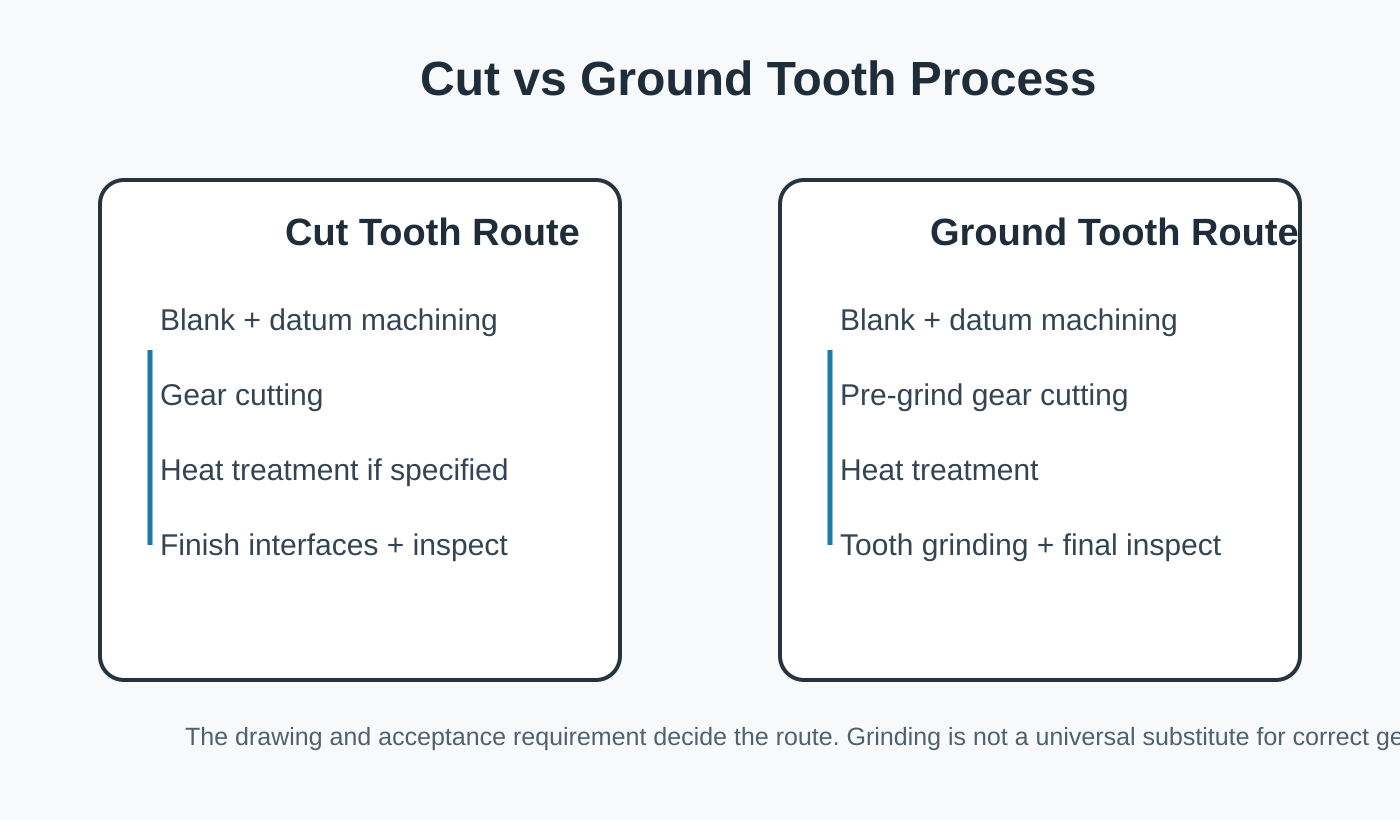
Quais mudanças foram feitas na Solicitação de Cotação (RFQ)?
| Área de solicitação de cotação | Rota do dente cortado | Rota do dente de moagem |
|---|---|---|
| Acabamento dentário | Indique o acabamento de corte exigido e os critérios de qualidade/inspeção. | Indique os requisitos para o dente retificado e os critérios de qualidade/inspeção do produto final. |
| Tratamento térmico | Especifique se é necessário para o projeto. | Tratamento térmico coordenado com sobretaxa de retificação e proteção de referência. |
| Datums | Necessário para corte de engrenagens e inspeção de interface. | Necessário antes do tratamento térmico e novamente para a retificação/inspeção final. |
| Inspeção | Verificações dimensionais e relacionadas aos dentes no desenho | Verificações finais dos dentes e da interface após o processo de retificação. |
| Impacto comercial | Geralmente, o percurso mais simples quando tecnicamente adequado. | Etapas adicionais de acabamento e inspeção devem ser incluídas desde o primeiro orçamento. |
A retificação não corrige uma montagem indefinida.
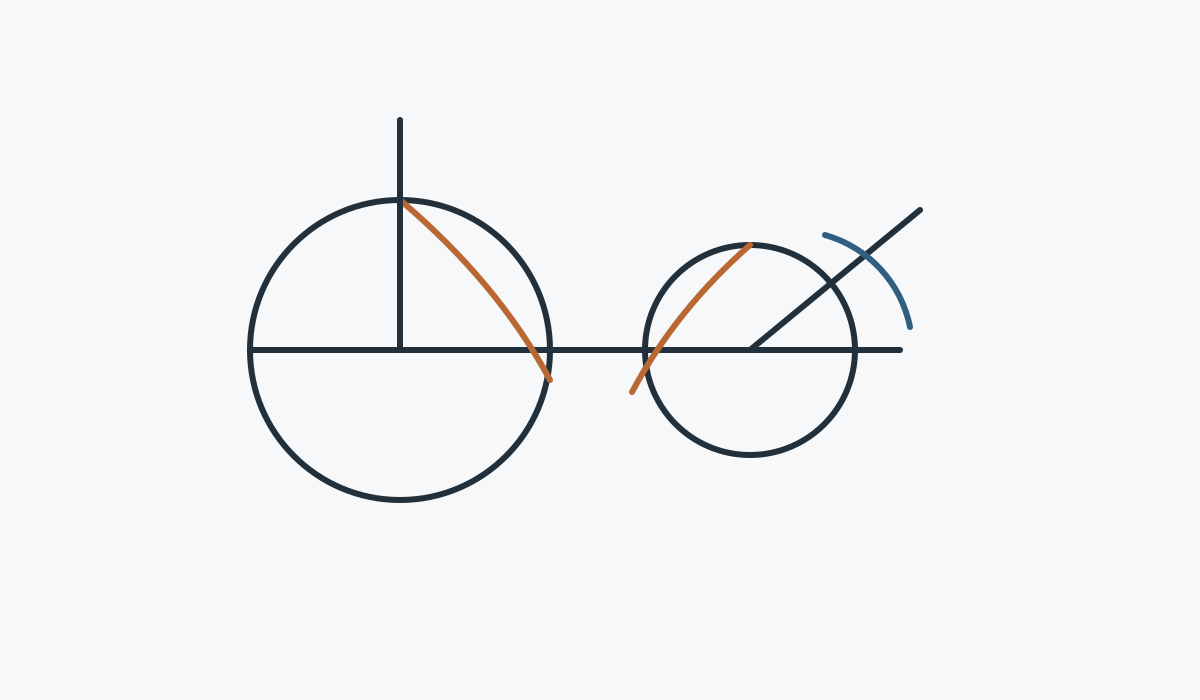
Mesmo com um acabamento preciso na superfície dos dentes, ainda é necessário que a geometria de acoplamento e a posição de montagem estejam corretas. Se o ângulo do eixo, a posição de contato ou a distância de montagem estiverem incorretos, escolher um acabamento retificado não garante a compatibilidade. O desenho do produto e a relação de montagem continuam sendo os principais fatores a serem considerados.
Quando solicitar um acabamento de dente polido
Utilize a retificação quando o desenho, os requisitos de desempenho ou o plano de fabricação controlado assim o exigirem. Evite especificar a retificação apenas por parecer mais precisa. A questão importante é se a máquina necessita de um acabamento dos dentes e de um nível de inspeção que justifiquem a escolha desse método.
Caso o requisito ainda esteja em aberto, descreva a função, a sensibilidade do posicionamento, o serviço esperado e as necessidades de inspeção para que o processo possa ser revisado sem transformar uma preferência de marketing em uma restrição técnica.
Como comparar orçamentos para as duas rotas
Compare mais do que apenas o preço unitário final. Confirme se as cotações consideram o mesmo material, processo de tratamento térmico, acabamento dos dentes, escopo de inspeção e quantidade. Uma cotação para dentes retificados pode incluir etapas adicionais que uma cotação para dentes usinados não inclui. Se essas premissas não forem documentadas, dois preços podem parecer diferentes mesmo que não se refiram ao mesmo resultado técnico.
Para protótipos, pergunte se a produção subsequente seguirá o mesmo processo e plano de inspeção. Isso evita aprovar uma amostra fabricada de uma maneira e receber uma produção feita de outra forma, sem uma alteração controlada.
Perguntas frequentes dos compradores
Equipamento de apoio em solo é sempre mais silencioso?
O nível de ruído depende do conjunto completo, da geometria, da montagem, da carcaça, da lubrificação e das condições de operação. Um acabamento retificado por si só não garante um nível de ruído equivalente ao de uma máquina.
Uma engrenagem cortada pode ser retificada após tratamento térmico?
O traçado da engrenagem exige margem para retificação, pontos de referência adequados e planejamento do processo desde o início. Não presuma que uma engrenagem cortada e acabada possa simplesmente ser retificada posteriormente.
Qual rota devo solicitar se o desenho não especificar nenhuma?
Descreva a necessidade de cumprimento das obrigações e, em seguida, analise o caminho apropriado. Evite adicionar um processo de fabricação apenas por prestígio.
Envie o par de engrenagens, o desenho e a especificação de funcionamento em uma única solicitação de cotação.
Quanto mais claramente definidas forem a relação de acoplamento e os dados de montagem, mais rapidamente a configuração poderá ser revisada.
Orientações sobre encomendas e entregas
A quantidade mínima de encomenda (MOQ) é flexível, variando conforme o tipo de produto, o processo de fabricação e o valor total do pedido. Novos projetos adequados podem solicitar de 1 a 5 peças de amostra, com preço de amostra. Modelos mistos podem ser combinados quando o valor total do pedido atingir aproximadamente USD 1.500. Pedidos de 1 a 2 peças podem ser analisados, embora o custo unitário seja normalmente maior.
Os prazos de planejamento típicos são de 10 a 25 dias úteis para peças padrão, de 20 a 45 dias úteis para componentes personalizados e de 45 a 120 dias úteis para equipamentos ou conjuntos de projetos especiais. Os termos EXW, FOB, CIF e DAP são comumente aceitos; FCA, CFR, CPT, CIP e DDP podem ser negociados para o envio.