Product Description
Company Profiles
-We are a leading gear motor manufacturer
ZHangZhoug Xihu (West Lake) Dis.hai Reducer is a leading manufacturer of gear motor and gearbox.
Since 1991, we have specialized in manufacturing a wide range of gear motor and gear box including:
- helical gear motor
- helical bevel gear motor
- parallel shaft helical gear motor
- helical worm gear motor
- hoist drive
- heavy-duty helical gearbox
- heavy-duty helical bevel gearbox
- gear motor for car parking system
- sprial bevel gearbox
Product Description
HD series spiral bevel gear unit is composed with a pair of spiral bevel gears.
Mounting position: the shape of the housing is a regular hexahedron, which can be installed in different ways.
Thechnical data:
motor power: 0.12KW~160KW
rated output torque: 3N·m~1000N·m
gear ratio:1~5
Product Show
Product Specification
| Product features | |||||||
| 1. Spiral bevel gearbox with various types are standardized, all ratios of 1:1, 1.5:1, 2:1, 2.5:1, 3:1, 4:1, 5:1 are actual ones, and average efficiency is 98%. | |||||||
| 2. Gear can rotate in both directions and transmit smoothly, low noise, light vibration and high load capacity. | |||||||
| 3. Modular design, has many ratios, motor combinations, mounting positions and structures to meet the different working conditions. | |||||||
| 4.Gears are made of high quality alloy steel, the surface hardness can be HRC58-62 after heat treatment (such as carburizing and quenching), the precision is 5-6 grades. | |||||||
| 5.Using computer gear tooth modification technology to improve load capacity of reducer. | |||||||
| There are a single axis, double horizontal shaft, vertical single, double longitudinal axis as optionals. It is widely used in metallurgy, mining, petrochemical, tobacco, ceramics, rubber, grain and oil food, beer beverage, transportation, and domestic emerging logistics equipment, parking equipment, environmental protection and other industries. The spiral bevel gears can be positive and negative, low speed or high speed.. | |||||||
| General Technical data | |||||||
| Housing material | HT250 high-strength Cast Iron | ||||||
| Housing hardness | HBS190-240 | ||||||
| Pinion material | 20CrMnTiH | ||||||
| Gear material | 20CrMnTiH | ||||||
| Surface hardness of gears | HRC58°~62 ° | ||||||
| Gear core hardness | HRC33~40 | ||||||
| Input/output shaft material | 40CrMnTiH | ||||||
| Input / Output shaft hardness | HRC25~30 | ||||||
| Machining precision of gears | accurate grinding, 6~7 Grade | ||||||
| Lubricating oil | L-CKC220 (GB 5903-95) | ||||||
| Heat treatment | tempering, cementiting, quenching, etc. | ||||||
| Efficiency | 98% | ||||||
| Noise (MAX) | 60~68dB | ||||||
| Temp. rise (MAX) | 40°C | ||||||
| Temp. rise (Oil)(MAX) | 50°C | ||||||
| Vibration | ≤20µm | ||||||
| Backlash | ≤20Arcmin | ||||||
| Brand of bearings | China Top brand C&U,LYC,TMB or other brands requested, SKF….. | ||||||
| Brand of oil seal | CTY— ZheJiang or other brands requested | ||||||
Package
Plastic bag + wooden carton
Certificate
FAQ
Q: Can you print other colors?
Yes. Customized color can be printed on the gear motor according to your requirements.
Q: Is that factory price?
Yes. We assure you all prices are based on factory.
Q: What is the life span? what is the guarantee
The lifespan of gear motor can reach 5-20 years depending on different working conditions .The guarantee time is 1 year after delivery.
Q: What documents are available?
A full range documents including structural drawings, packing list, installation manual and relative certificates can be provided. Moreover, customs declaration is provided. We provide one-stop service for you.
Q: Is it able to customized?
yes, we could re-design and produce the gear motor as your requirements if the quantity is large.
| Application: | Motor, Machinery, Nuclear Industry |
|---|---|
| Hardness: | Hardened Tooth Surface |
| Installation: | Horizontal Type |
| Layout: | Coaxial |
| Gear Shape: | Spiral |
| Step: | Three-Step |
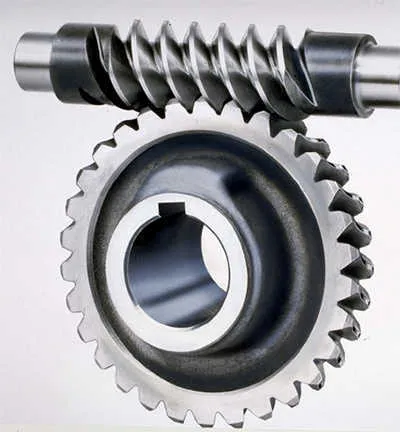
How do spiral gears handle changes in direction and torque transmission?
Spiral gears are well-suited to handle changes in direction and torque transmission due to their unique design and characteristics. Here’s how spiral gears handle these aspects:
- Smooth Direction Changes: Spiral gears excel at transmitting power smoothly even during changes in direction. The helical tooth arrangement allows for gradual tooth engagement and disengagement as the gears rotate. This gradual engagement minimizes the impact and shock typically associated with sudden direction changes in gear systems. As a result, spiral gears provide smoother and more reliable power transmission during both forward and reverse rotations.
- Torque Transmission: Spiral gears are capable of transmitting high torque loads. The helical tooth profile and increased tooth contact area allow for efficient torque transfer between the driving and driven gears. The load distribution across multiple teeth helps to minimize stress concentration and maximize the gear’s torque-carrying capacity. This makes spiral gears suitable for applications requiring high torque transmission, such as heavy machinery and industrial equipment.
- Axial Thrust Compensation: Spiral gears can be designed with opposite helix angles on mating gears, resulting in axial thrust cancellation. This feature is particularly beneficial when dealing with bidirectional torque transmission. By canceling out the axial thrust, spiral gears can operate with reduced axial forces, ensuring smoother gear operation and minimizing the need for additional thrust bearings or complicated gear arrangements.
- Load Sharing: Spiral gears naturally distribute the load across multiple teeth due to their helical tooth arrangement. This load sharing capability helps to minimize tooth wear and fatigue, ensuring long-term durability and reliability, especially when subjected to varying torque conditions. By distributing the load, spiral gears can handle torque variations more effectively and maintain uniform tooth contact, resulting in improved performance and extended gear life.
These characteristics of spiral gears—smooth direction changes, efficient torque transmission, axial thrust compensation, and load sharing—make them highly suitable for applications that require reliable and precise power transmission in both directions. Spiral gears are commonly used in various industries, including automotive, aerospace, and heavy machinery, where the ability to handle changes in direction and torque is crucial.
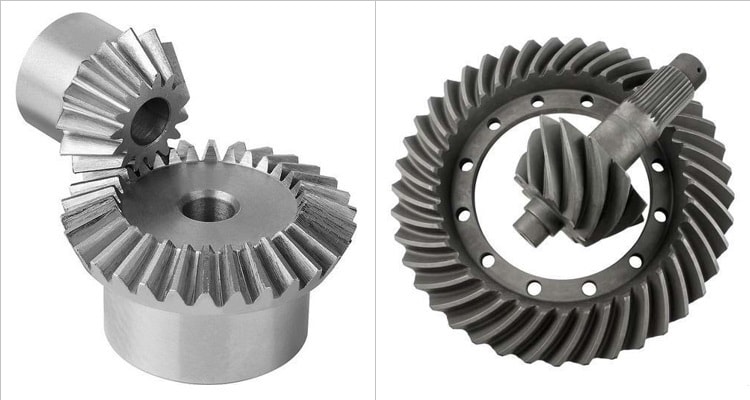
What are the limitations of using spiral gears in certain applications?
While spiral gears offer numerous advantages, they also have certain limitations that need to be considered when selecting them for specific applications. Here are some limitations of using spiral gears:
- Axial Thrust: Spiral gears generate axial thrust due to their helical tooth arrangement. This axial thrust can impose additional forces on the gear shafts and bearings, requiring proper design considerations and potential incorporation of thrust bearings in certain applications. Managing and compensating for axial thrust is crucial to ensure smooth gear operation.
- Manufacturing Complexity: The manufacturing process for spiral gears involves more complexity compared to straight-toothed gears. The helical tooth profile requires specialized cutting tools and machining techniques, adding to the manufacturing cost and complexity. This complexity may limit their use in applications with strict cost constraints or where simplicity of manufacturing is a priority.
- Axial Space Requirement: Spiral gears require more axial space compared to parallel-axis gears. The helical tooth profile results in a longer gear face width, which can limit their use in applications with space constraints. It is important to ensure that sufficient axial space is available to accommodate the larger size of spiral gears.
- Gear Alignment: Proper gear alignment is critical for spiral gears to function optimally. Any misalignment between the driving and driven gears can result in increased noise, vibration, and premature wear. Achieving and maintaining precise gear alignment may require additional attention and care during installation and regular maintenance.
- Speed Limitations: Spiral gears may have certain speed limitations due to the potential for tooth deflection and increased heat generation. At high speeds, the centrifugal forces acting on the helical teeth can cause deflection, leading to reduced gear accuracy and increased noise. Additionally, the sliding contact between the teeth can result in higher heat generation, requiring appropriate lubrication and cooling measures in high-speed applications.
While these limitations exist, they can often be managed or mitigated through proper design, engineering, and maintenance practices. It is important to carefully evaluate the specific requirements and constraints of the application to determine whether spiral gears are suitable or if alternative gear types may be more appropriate.
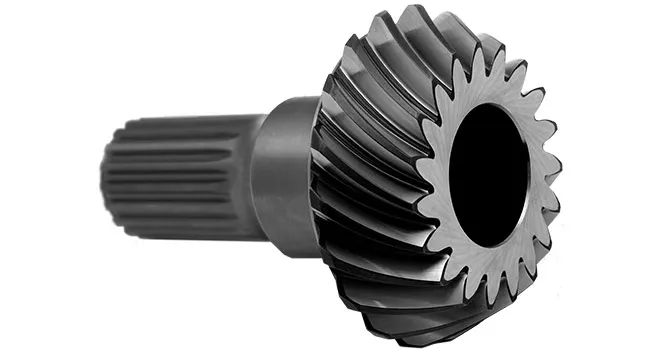
How do spiral gears contribute to smoother and quieter gear engagement?
Spiral gears, also known as helical gears, offer several design features that contribute to smoother and quieter gear engagement compared to other gear types. Here’s how spiral gears achieve this:
- Gradual Tooth Engagement: The helical tooth arrangement in spiral gears allows for gradual tooth engagement as the gears mesh. Unlike straight-cut gears, where the teeth make sudden contact, spiral gears have angled teeth that come into contact gradually. This gradual engagement helps to reduce impact and noise during gear meshing.
- Increased Contact Ratio: The helical tooth design of spiral gears provides a higher contact ratio compared to straight-cut gears. The contact ratio refers to the number of teeth in mesh at any given time. With a higher contact ratio, the load is distributed over multiple teeth, resulting in reduced stress on individual teeth and smoother gear operation.
- Reduced Sliding Friction: The helical tooth arrangement in spiral gears helps minimize sliding friction between the teeth. As the teeth mesh, the angled surfaces slide against each other instead of making direct contact. This sliding action reduces friction and wear, leading to smoother operation and reduced noise levels.
- Efficient Load Distribution: Spiral gears distribute the load over multiple teeth due to their helical tooth arrangement. This distribution of load helps to evenly distribute the forces and minimize localized stresses. By spreading the load, spiral gears can handle higher torque transmission and carry heavier loads, resulting in smoother and more reliable gear engagement.
- Axial Thrust Compensation: Spiral gears can be designed with opposite helix angles on mating gears. This configuration helps cancel out the axial thrust generated during gear meshing. By eliminating or reducing the axial thrust, spiral gears reduce the need for additional thrust bearings and simplify the gear design, contributing to smoother operation.
These design features of spiral gears, including gradual tooth engagement, increased contact ratio, reduced sliding friction, efficient load distribution, and axial thrust compensation, work together to provide smoother and quieter gear engagement. These characteristics make spiral gears ideal for applications where noise reduction, smooth operation, and reliable gear meshing are essential.


editor by CX 2023-10-08