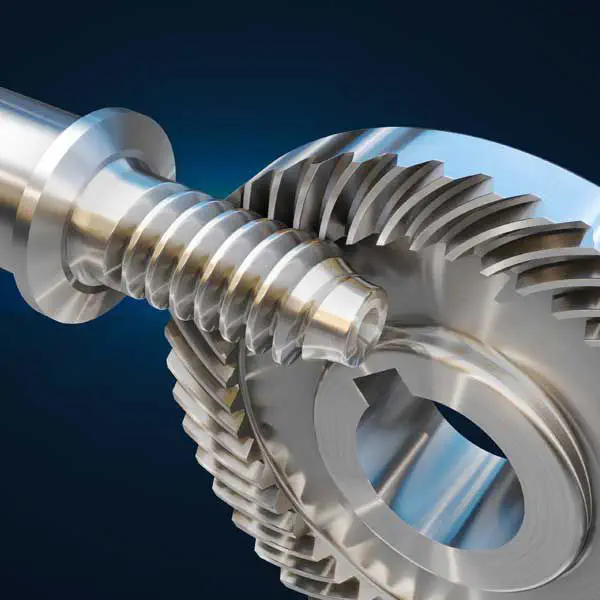
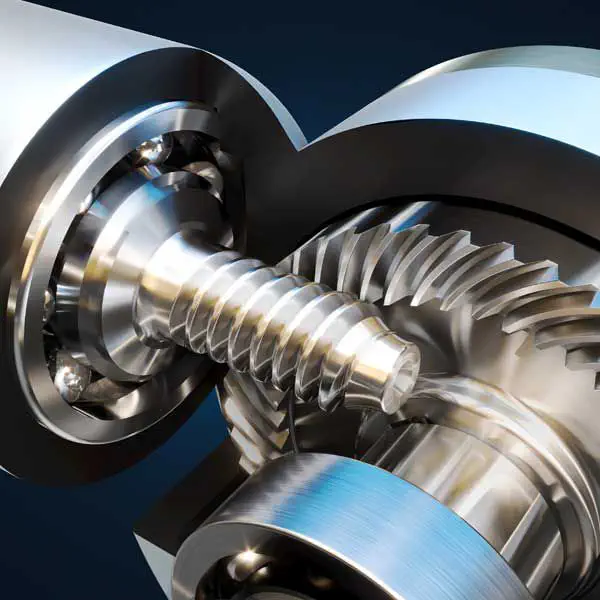
Product Description
|
Material |
Non-ferrous alloy material like carbon steel, stainless steel, galvanized steel, aluminum, copper, brass, etc |
|
Surface Finish: |
All kinds of surface treatment are available like chrome plating, zinc plating , nick plating , powder coating, e-coating, dip coating, mirror polishing, etc. |
|
Application |
Electronic/Appliance/Auto/Industrial equipment metal stamping hardware parts |
|
Processing |
Our process includes tooling fabrication, stamping, deep drawing, punching, spinning, laser cutting, bending, seamless welding, machining and assembly |
|
AvailableCertificate |
ISO 9001, SGS, Material Certificate |
|
Accident Prevention |
Safety Operation Management |
|
Quality Control |
Liability System and Periodical QC on line every hour |
|
Main Market |
USA/Germany/Canada/Italy/United Kingdom/Australia/Pakistan/French , etc |
HangZhou CHINAMFG Industry Co., Ltd. is a specialized supplier of a full range of chains, sprockets, gears, gear racks, v belt pulley, timing pulley, V-belts, couplings, machined parts and so on.
Due to our CHINAMFG in offering best service to our clients, understanding of your needs and overriding sense of responsibility toward filling ordering requirements, we have obtained the trust of buyers worldwide. Having accumulated precious experience in cooperating with foreign customers, our products are selling well in the American, European, South American and Asian markets. Our products are manufactured by modern computerized machinery and equipment. Meanwhile, our products are manufactured according to high quality standards, and complying with the international advanced standard criteria.
With many years’ experience in this line, we will be trusted by our advantages in competitive price, one-time delivery, prompt response, on-hand engineering support and good after-sales services.
Additionally, all our production procedures are in compliance with ISO9001 standards. We also can design and make non-standard products to meet customers’ special requirements. Quality and credit are the bases that make a corporation alive. We will provide best services and high quality products with all sincerity. If you need any information or samples, please contact us and you will have our soon reply.
| Application: | Motor, Electric Cars, Motorcycle, Machinery, Marine, Agricultural Machinery, Car |
|---|---|
| Hardness: | Hardened Tooth Surface |
| Gear Position: | External Gear |
| Manufacturing Method: | Rolling Gear |
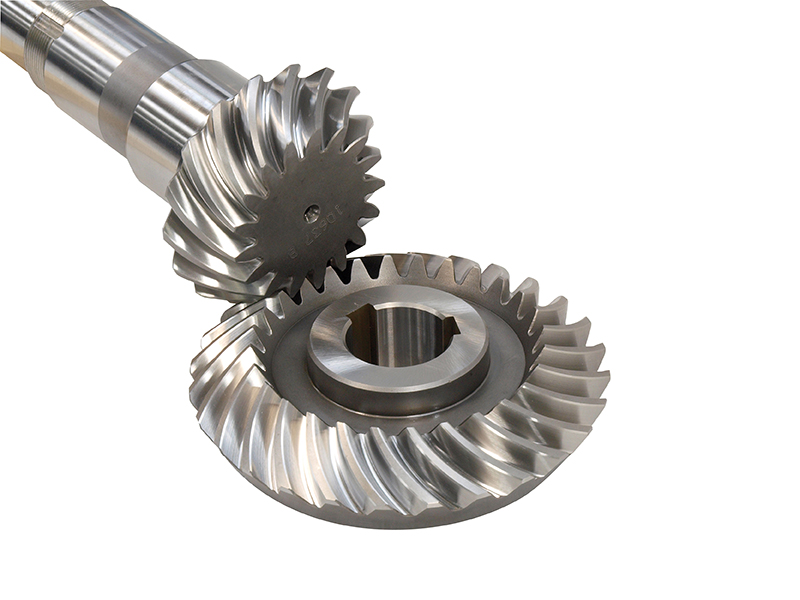
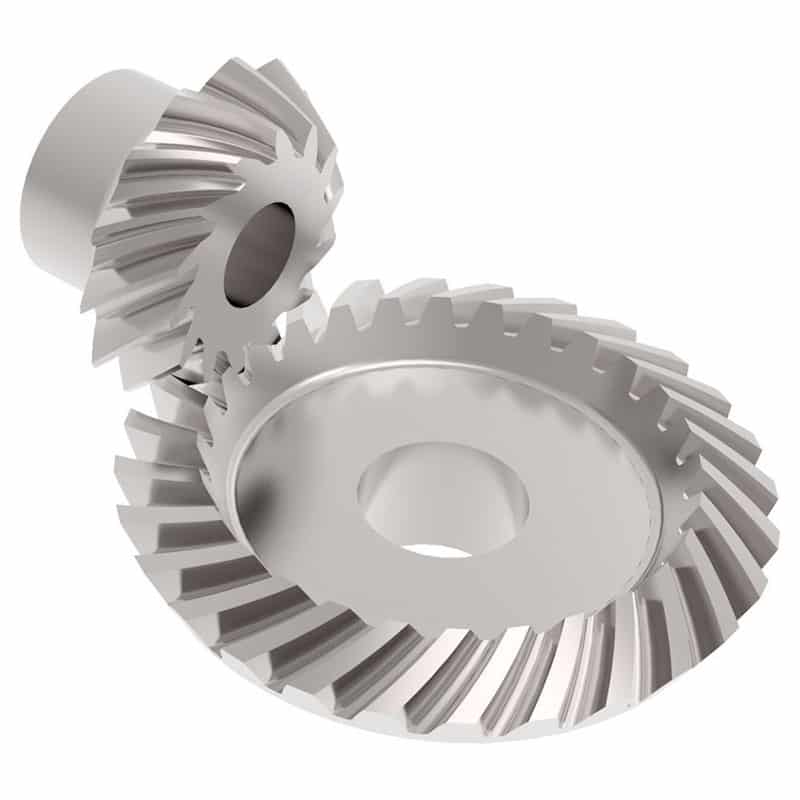
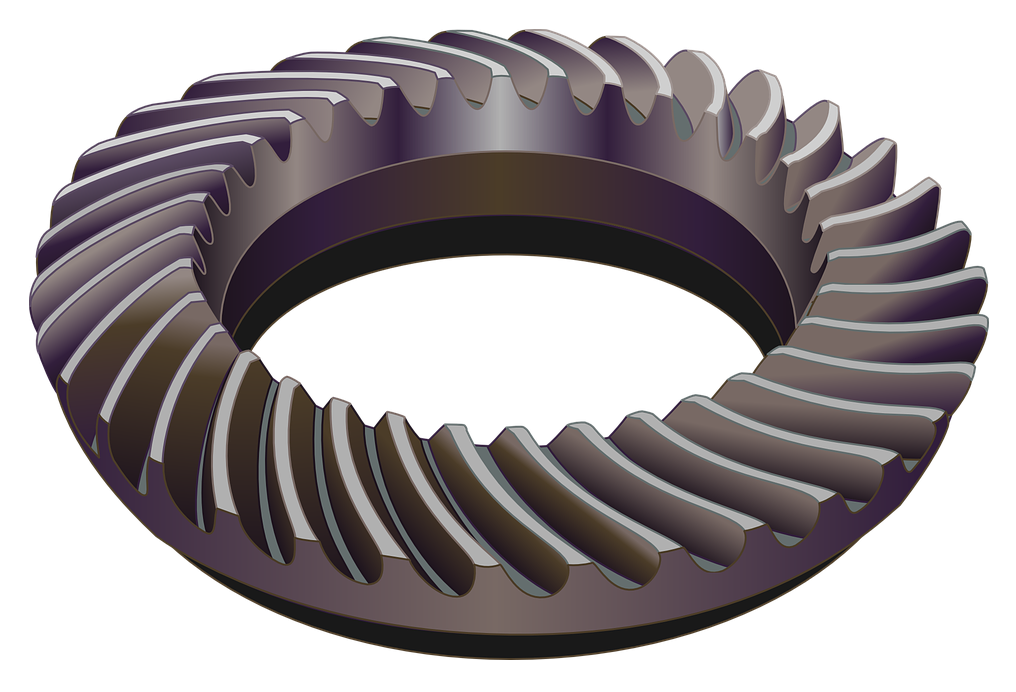
| Toothed Portion Shape: | Bevel Wheel |
| Material: | Stainless Steel |
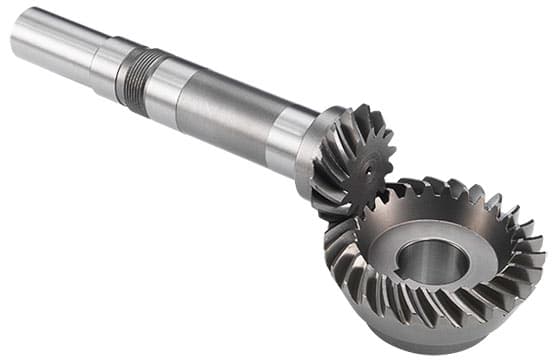
Can spiral gears be used in automotive applications?
Yes, spiral gears can be used in automotive applications and provide several advantages in this context. Here’s why spiral gears are suitable for automotive applications:
- Noise Reduction: Spiral gears offer significant noise reduction compared to other gear types, making them ideal for automotive applications that require quiet operation. The helical tooth arrangement minimizes gear meshing noise by providing gradual tooth engagement, reducing impact and vibration.
- Smooth Operation: The gradual tooth engagement of spiral gears also contributes to smoother gear operation. This smoothness helps to improve shifting performance, leading to enhanced driving comfort and reduced wear on transmission components.
- High Load Capacity: Spiral gears have a high load-carrying capacity, which is important in automotive applications where gears are subjected to varying loads. They can handle the torque requirements of transmissions and differential systems effectively.
- Efficient Power Transmission: Spiral gears offer efficient power transmission due to their helical tooth profile. This efficiency helps optimize fuel consumption and overall vehicle performance. By reducing energy losses through improved tooth contact and reduced sliding friction, spiral gears contribute to better power transfer.
- Durability and Reliability: Automotive applications demand gears that can withstand continuous use and provide long-term reliability. Spiral gears are known for their durability, thanks to load distribution and reduced stress concentration. They can maintain reliable performance even under challenging conditions.
- Axial Thrust Compensation: Spiral gears can be designed with opposite helix angles to cancel out axial thrust. This feature is particularly beneficial in automotive applications where minimizing axial forces is crucial. It simplifies gear design and reduces the need for additional components, enhancing space efficiency.
Considering their noise reduction capabilities, smooth operation, high load capacity, efficient power transmission, durability, and axial thrust compensation, spiral gears are well-suited for various automotive applications. They are commonly used in transmissions, differentials, and other drivetrain components to ensure reliable and efficient power transfer, contributing to overall vehicle performance and comfort.
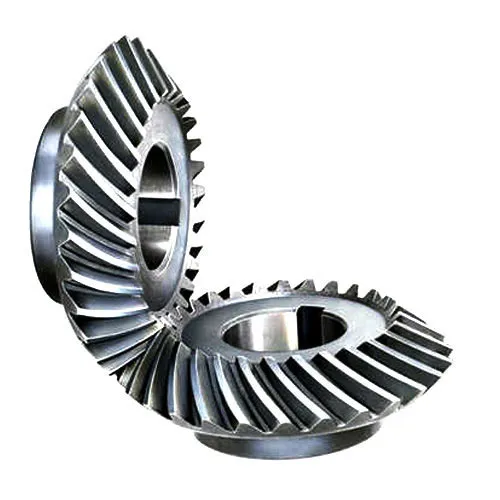
What is the impact of helix angle on spiral gear performance?
The helix angle plays a crucial role in determining the performance characteristics of spiral gears. It affects various aspects of gear operation and functionality. Here’s the impact of the helix angle on spiral gear performance:
- Load-Carrying Capacity: The helix angle influences the load-carrying capacity of spiral gears. A larger helix angle results in a more pronounced helical shape of the teeth, providing a larger contact area between the gears. This increased contact area allows spiral gears to distribute the load over more teeth, thereby increasing their load-carrying capacity. Gears with larger helix angles can handle higher loads and transmit more torque.
- Smoothness of Operation: The helix angle significantly affects the smoothness of gear operation. A larger helix angle leads to a more gradual tooth engagement as the gears mesh. This gradual engagement reduces impact and vibration during gear meshing, resulting in smoother operation and reduced noise levels. Spiral gears with larger helix angles are known for their quiet operation and enhanced gear meshing characteristics.
- Efficiency and Power Transmission: The helix angle also influences the efficiency of power transmission in spiral gears. A larger helix angle reduces sliding friction between the teeth during meshing. This reduction in friction results in improved power transmission efficiency and reduced energy losses. Gears with larger helix angles are more efficient in transmitting power, making them suitable for applications where power efficiency is a critical factor.
- Axial Thrust and Thrust Load: The helix angle affects the axial thrust and thrust load in spiral gears. Axial thrust is the force generated in the axial direction due to the helical tooth arrangement. A larger helix angle produces a higher axial thrust, while a smaller angle generates a lower axial thrust. The axial thrust must be considered and managed in gear design to ensure proper gear support and minimize the need for additional thrust bearings.
- Contact Pattern and Gear Meshing: The helix angle influences the contact pattern between the teeth during gear meshing. A larger helix angle shifts the contact pattern across the tooth face, allowing for more even distribution of the load and reduced stress concentration. The contact pattern also affects the gear meshing characteristics, such as tooth wear and noise generation. Proper selection of the helix angle ensures optimal contact pattern and improved gear meshing performance.
The choice of helix angle in spiral gears depends on the specific application requirements, including load capacity, smoothness of operation, power transmission efficiency, and axial thrust considerations. By selecting an appropriate helix angle, engineers can optimize spiral gear performance for different applications, ensuring reliable and efficient gear operation.
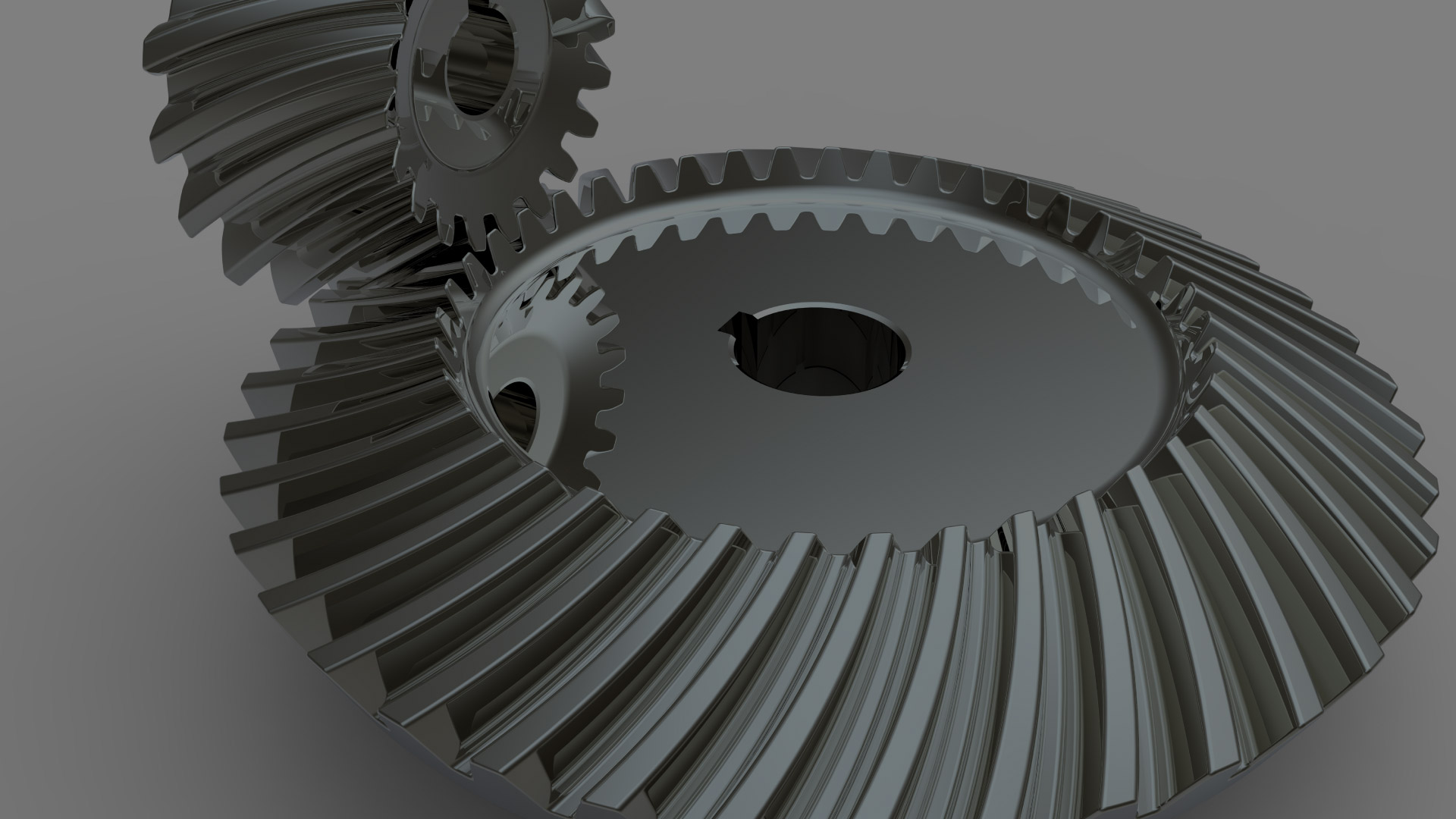
What industries commonly use spiral gears in their applications?
Spiral gears, also known as helical gears, find applications in various industries due to their unique design and advantages. Here are some industries that commonly use spiral gears:
- Automotive: Spiral gears are widely used in the automotive industry, particularly in applications such as gearboxes and automotive differentials. They provide efficient power transmission, smooth operation, and the ability to handle high torque loads.
- Industrial Machinery: Many industrial machinery applications benefit from the use of spiral gears. These include heavy-duty machinery such as mining equipment, construction machinery, and manufacturing machinery. Spiral gears provide high load capacity, efficient power transmission, and reduced noise levels.
- Power Generation: Spiral gears are utilized in power generation systems such as wind turbines, hydroelectric turbines, and steam turbines. They play a critical role in transmitting power from the turbine to the generator, providing efficient and reliable power transmission in these energy production systems.
- Aerospace and Defense: The aerospace and defense industries employ spiral gears in various applications, including aircraft engines, missile systems, and satellite mechanisms. Spiral gears offer high load capacity, efficient power transmission, and the ability to withstand demanding operating conditions.
- Machine Tools: Spiral gears are commonly used in machine tools, such as milling machines, lathes, and grinding machines. These gears contribute to the smooth and precise motion of the tools, ensuring accurate machining operations.
- Robotics and Automation: Spiral gears are utilized in robotics and automation systems for their ability to provide precise and efficient motion transmission. They are crucial components in robotic arms, automated assembly lines, and other industrial automation applications.
These are just a few examples of industries that commonly use spiral gears. However, spiral gears can be found in various other applications where the advantages of smooth operation, high load capacity, efficient power transmission, and reduced noise levels are desired.


editor by CX 2023-10-25
China manufacturer Power Tools Spare Parts High Precision Spiral Bevel Gear for 4030 Angle Grinder bevel gearbox
Product Description
Product Description
High Precision Spiral Bevel Gear For 4030 Angle Grinder.
Detailed Photos
Packaging & Shipping
COLOR BOX WITH MASTER CARTON OR BY BUYER’S PURPOSE
Universal: 60Sets/Middle box, and 300Sets/Outer box
Workshop Photos
Company Profile
HangZhou Longma switch factory was established in 1998, located in China hardware capital-HangZhou. Our products can be in auxiliary use of many brand tools both domestically and internationally, over a period of more than 20 years, our products are exported to Russia, India, Indonesia, Malaysia, Ukraine, Turkey and other countries, have a certain visibility in the power tool industry. With sticking to honest-oriented and customer-first philosophy, our factory is dedicated to domestic and foreign customers.
| Application: | Motor, Power Tool/ Angle Grinder |
|---|---|
| Hardness: | Hardened Tooth Surface |
| Gear Position: | External Gear |
| Manufacturing Method: | Cut Gear |
| Toothed Portion Shape: | Bevel Wheel |
| Material: | Cast Steel |
| Samples: |
US$ 1/Pair
1 Pair(Min.Order) | |
|---|
| Customization: |
Available
| Customized Request |
|---|
Can spiral gears be used in automotive applications?
Yes, spiral gears can be used in automotive applications and provide several advantages in this context. Here’s why spiral gears are suitable for automotive applications:
- Noise Reduction: Spiral gears offer significant noise reduction compared to other gear types, making them ideal for automotive applications that require quiet operation. The helical tooth arrangement minimizes gear meshing noise by providing gradual tooth engagement, reducing impact and vibration.
- Smooth Operation: The gradual tooth engagement of spiral gears also contributes to smoother gear operation. This smoothness helps to improve shifting performance, leading to enhanced driving comfort and reduced wear on transmission components.
- High Load Capacity: Spiral gears have a high load-carrying capacity, which is important in automotive applications where gears are subjected to varying loads. They can handle the torque requirements of transmissions and differential systems effectively.
- Efficient Power Transmission: Spiral gears offer efficient power transmission due to their helical tooth profile. This efficiency helps optimize fuel consumption and overall vehicle performance. By reducing energy losses through improved tooth contact and reduced sliding friction, spiral gears contribute to better power transfer.
- Durability and Reliability: Automotive applications demand gears that can withstand continuous use and provide long-term reliability. Spiral gears are known for their durability, thanks to load distribution and reduced stress concentration. They can maintain reliable performance even under challenging conditions.
- Axial Thrust Compensation: Spiral gears can be designed with opposite helix angles to cancel out axial thrust. This feature is particularly beneficial in automotive applications where minimizing axial forces is crucial. It simplifies gear design and reduces the need for additional components, enhancing space efficiency.
Considering their noise reduction capabilities, smooth operation, high load capacity, efficient power transmission, durability, and axial thrust compensation, spiral gears are well-suited for various automotive applications. They are commonly used in transmissions, differentials, and other drivetrain components to ensure reliable and efficient power transfer, contributing to overall vehicle performance and comfort.
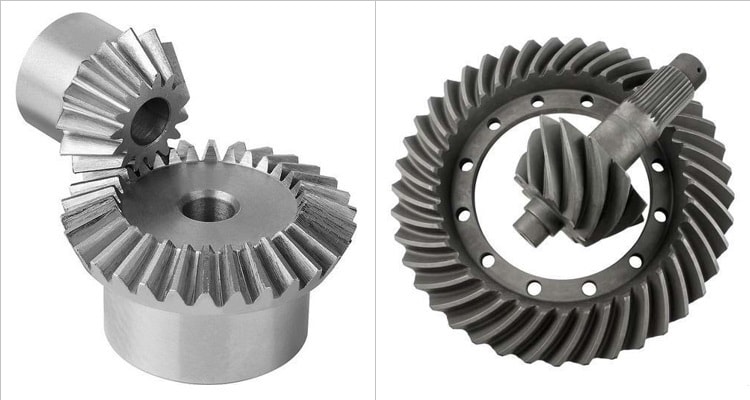
What are the limitations of using spiral gears in certain applications?
While spiral gears offer numerous advantages, they also have certain limitations that need to be considered when selecting them for specific applications. Here are some limitations of using spiral gears:
- Axial Thrust: Spiral gears generate axial thrust due to their helical tooth arrangement. This axial thrust can impose additional forces on the gear shafts and bearings, requiring proper design considerations and potential incorporation of thrust bearings in certain applications. Managing and compensating for axial thrust is crucial to ensure smooth gear operation.
- Manufacturing Complexity: The manufacturing process for spiral gears involves more complexity compared to straight-toothed gears. The helical tooth profile requires specialized cutting tools and machining techniques, adding to the manufacturing cost and complexity. This complexity may limit their use in applications with strict cost constraints or where simplicity of manufacturing is a priority.
- Axial Space Requirement: Spiral gears require more axial space compared to parallel-axis gears. The helical tooth profile results in a longer gear face width, which can limit their use in applications with space constraints. It is important to ensure that sufficient axial space is available to accommodate the larger size of spiral gears.
- Gear Alignment: Proper gear alignment is critical for spiral gears to function optimally. Any misalignment between the driving and driven gears can result in increased noise, vibration, and premature wear. Achieving and maintaining precise gear alignment may require additional attention and care during installation and regular maintenance.
- Speed Limitations: Spiral gears may have certain speed limitations due to the potential for tooth deflection and increased heat generation. At high speeds, the centrifugal forces acting on the helical teeth can cause deflection, leading to reduced gear accuracy and increased noise. Additionally, the sliding contact between the teeth can result in higher heat generation, requiring appropriate lubrication and cooling measures in high-speed applications.
While these limitations exist, they can often be managed or mitigated through proper design, engineering, and maintenance practices. It is important to carefully evaluate the specific requirements and constraints of the application to determine whether spiral gears are suitable or if alternative gear types may be more appropriate.
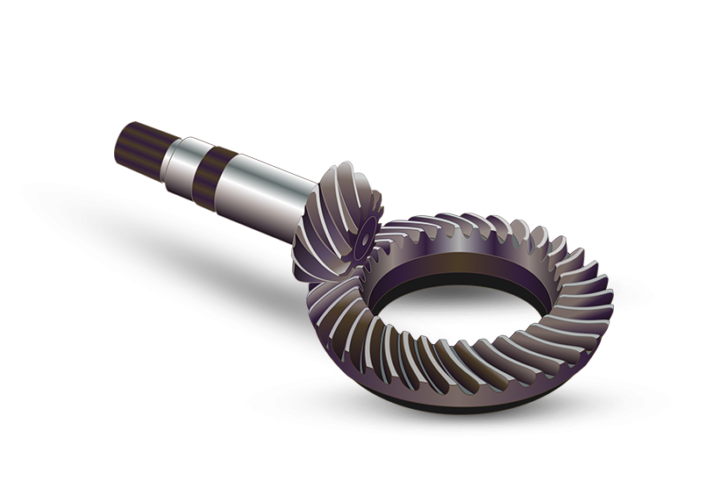
Can you explain the advantages of using spiral gears over other gear types?
Spiral gears, also known as helical gears, offer several advantages over other gear types. These advantages stem from their unique design and characteristics. Here are some key advantages of using spiral gears:
- Smooth and Quiet Operation: The helical tooth arrangement in spiral gears enables gradual tooth engagement, resulting in smoother and quieter operation compared to straight-cut gears. The angled teeth allow for gradual contact, reducing impact and noise during gear meshing.
- High Load Capacity: Spiral gears can handle higher loads compared to straight-cut gears. The helical tooth design distributes the load over multiple teeth, increasing the load-carrying capacity and providing improved strength. This makes spiral gears well-suited for applications that require the transmission of high torque or the handling of significant loads.
- Efficient Power Transmission: Spiral gears exhibit higher efficiency compared to straight-cut gears. The helical tooth arrangement helps minimize sliding friction between the teeth, resulting in reduced power losses due to friction during gear operation. This efficiency is crucial in applications where power transmission needs to be optimized, and energy losses need to be minimized.
- Reduced Noise and Vibration: The gradual tooth engagement in spiral gears leads to reduced impact and vibration during gear meshing. This results in quieter operation, making spiral gears suitable for applications where noise reduction is important, such as in precision machinery or noise-sensitive environments.
- Axial Thrust Compensation: Spiral gears can be designed with opposite helix angles on mating gears, which helps cancel out the axial thrust generated during gear meshing. This feature eliminates the need for additional thrust bearings, simplifying the gear design and reducing complexity.
- Versatility and Adaptability: Spiral gears can be manufactured in various configurations, including spur, helical, and double helical designs. This versatility allows for their application in a wide range of machinery and systems, providing flexibility in gear design and usage.
These advantages make spiral gears a preferred choice in many applications where smooth operation, high load capacity, efficient power transmission, reduced noise, and versatility are important considerations.
editor by CX 2023-10-24
China Hot selling Complete Reduction Gearbox Differential Spiral Bevel Gear 8-97083-126-0 7/41 for CZPT Npr with high quality
Product Description
Product Description
| Car Fitment | Isuzu |
| OE No. | 8-97083-126-0 |
| Speed Ratio | 7/41 |
| Type | Differential Gear |
| Material | 20CrMnTi/ 8620 |
| Hardness | HRC58-62 |
| Treatment | Carburizing,Hardening, tempering,high frequency treatment,black coating,zincing,nickelage |
Company Profile
HangZhou CHINAMFG Machinery is a professional manufacture of spiral bevel gear. The company has CNC milling machine, the GLEASON milling machine, rolling inspection machine, gear measuring center, a full set of metallographic analysis, inspection equipment and other related advanced equipment.
Our company owns gear measuring center equipped with advanced testing machines such as contourgraph, universal measuring microscope and full set netlaaographic analysis detector. According to various technical requirements and through procedures of sampling, special inspection and re-examination, multi-indexes of gears like observation, measurement and tracking can be completed.
With our high quality products, high credibility and trusty cooperation, aiming to be a highly specialized gear manufacturer of high level and all-directional service,we are looking CHINAMFG to your business negotiation and our promising cooperation.
FAQ
Q1: Are your products standard?
A: Our model is standard, if you have specific demand, pls tell us the details.
Q2: What is you main categories?
A: CHINAMFG truck parts, CHINAMFG truck parts, Hino truck parts, CHINAMFG truck parts,Toyota truck parts, Mazda truck parts,Suzuki truck parts,etc.
Q3: If we don’t find what we want on your website, what should we do?
A: You can email us the descriptions and pictures of the products you need, we will check whether we have them.
B: We develop new items every month, and some of them have not been uploaded to website in time. Or you can send us sample by express, we will develop this item for bulk purchasing.
Q4: What is your terms of payment?
A: T/T 30% as deposit, and 70% before delivery. We’ll show you the photos of the products and packages before you pay the balance.
Q5:Do you test all your goods before delivery?
Yes, we have 100% test before delivery.
| Application: | Motor, Electric Cars, Motorcycle, Machinery, Agricultural Machinery, Car |
|---|---|
| Hardness: | Hardened Tooth Surface |
| Gear Position: | External Gear |
| Manufacturing Method: | Cut Gear |
| Toothed Portion Shape: | Curved Gear |
| Material: | Cast Steel |
| Customization: |
Available
| Customized Request |
|---|
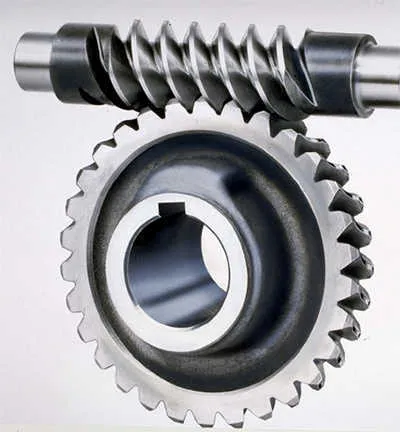
How do spiral gears handle changes in direction and torque transmission?
Spiral gears are well-suited to handle changes in direction and torque transmission due to their unique design and characteristics. Here’s how spiral gears handle these aspects:
- Smooth Direction Changes: Spiral gears excel at transmitting power smoothly even during changes in direction. The helical tooth arrangement allows for gradual tooth engagement and disengagement as the gears rotate. This gradual engagement minimizes the impact and shock typically associated with sudden direction changes in gear systems. As a result, spiral gears provide smoother and more reliable power transmission during both forward and reverse rotations.
- Torque Transmission: Spiral gears are capable of transmitting high torque loads. The helical tooth profile and increased tooth contact area allow for efficient torque transfer between the driving and driven gears. The load distribution across multiple teeth helps to minimize stress concentration and maximize the gear’s torque-carrying capacity. This makes spiral gears suitable for applications requiring high torque transmission, such as heavy machinery and industrial equipment.
- Axial Thrust Compensation: Spiral gears can be designed with opposite helix angles on mating gears, resulting in axial thrust cancellation. This feature is particularly beneficial when dealing with bidirectional torque transmission. By canceling out the axial thrust, spiral gears can operate with reduced axial forces, ensuring smoother gear operation and minimizing the need for additional thrust bearings or complicated gear arrangements.
- Load Sharing: Spiral gears naturally distribute the load across multiple teeth due to their helical tooth arrangement. This load sharing capability helps to minimize tooth wear and fatigue, ensuring long-term durability and reliability, especially when subjected to varying torque conditions. By distributing the load, spiral gears can handle torque variations more effectively and maintain uniform tooth contact, resulting in improved performance and extended gear life.
These characteristics of spiral gears—smooth direction changes, efficient torque transmission, axial thrust compensation, and load sharing—make them highly suitable for applications that require reliable and precise power transmission in both directions. Spiral gears are commonly used in various industries, including automotive, aerospace, and heavy machinery, where the ability to handle changes in direction and torque is crucial.
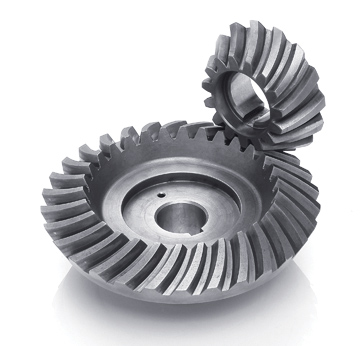
How do you calculate the gear ratio in a spiral gear system?
The gear ratio in a spiral gear system can be calculated by comparing the number of teeth on the driving gear (pinion) to the number of teeth on the driven gear (gear). The gear ratio represents the ratio of the angular velocity (speed) of the driving gear to the angular velocity of the driven gear. Here’s the formula to calculate the gear ratio:
Gear Ratio = Number of Teeth on Driven Gear / Number of Teeth on Driving Gear
For example, consider a spiral gear system where the driving gear (pinion) has 20 teeth, and the driven gear (gear) has 40 teeth. The gear ratio can be calculated as follows:
Gear Ratio = 40 / 20 = 2
In this example, the gear ratio is 2, which means the driven gear will rotate at half the speed of the driving gear. This calculation assumes that the gears have the same module (gear size) and that there are no additional gear stages in the system.
It’s important to note that the gear ratio determines the speed and torque relationship between the driving and driven gears. A gear ratio greater than 1 (e.g., 2, 3, etc.) indicates a reduction in speed and an increase in torque, while a gear ratio less than 1 (e.g., 0.5, 0.75, etc.) indicates an increase in speed and a reduction in torque.
When working with spiral gears, it’s essential to consider the helix angle and axial thrust in addition to the gear ratio to ensure proper gear design and performance.
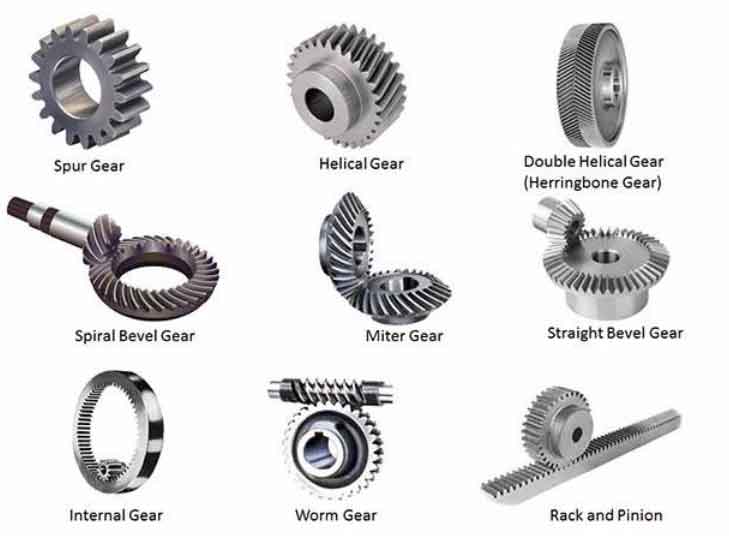
What are spiral gears and how are they used in machinery?
Spiral gears are a type of cylindrical gears with teeth that are curved in a spiral pattern. Unlike straight-cut gears, which have teeth that are parallel to the gear axis, spiral gears have teeth that are angled or helical. This helical tooth arrangement provides several advantages in terms of performance and noise reduction.
Spiral gears are commonly used in machinery for various applications due to the following reasons:
- Smooth and Quiet Operation: The helical tooth arrangement of spiral gears enables gradual tooth engagement, resulting in smoother and quieter operation compared to straight-cut gears. The angled teeth allow for gradual contact, reducing noise and vibration during gear meshing.
- Increased Load Capacity: The helical tooth design of spiral gears distributes the load over multiple teeth, increasing the load-carrying capacity. This makes spiral gears suitable for applications that require high torque transmission and heavy-duty operations.
- Improved Efficiency: The helical tooth arrangement of spiral gears helps in minimizing sliding friction between the teeth. This results in a higher level of efficiency compared to straight-cut gears, as there is reduced power loss due to friction during gear operation.
- Axial Thrust Compensation: Spiral gears can be designed with opposite helix angles on mating gears, which helps in canceling out the axial thrust generated during gear meshing. This feature eliminates the need for additional thrust bearings, simplifying the gear design and reducing complexity.
- Versatility: Spiral gears can be manufactured in various configurations, including spur, helical, and double helical designs. This versatility allows for their application in a wide range of machinery, including automotive systems, industrial equipment, and power transmission systems.
In machinery, spiral gears are commonly used in applications that require smooth operation, high load capacity, and efficient power transmission. Some examples include gearboxes, automotive differentials, machine tools, and heavy-duty industrial machinery.
Overall, the unique tooth geometry of spiral gears makes them a preferred choice in many machinery applications, offering improved performance, reduced noise, and enhanced load-carrying capabilities.
editor by CX 2023-10-23
China Good quality Motovario Version Wormgearbox, Universal Application Cast Iron Speed Reduction Gearbox with Best Sales
Product Description
1.Motovario NMRV version wormgearboxes,marked as SMRV in our factory,available reduction ratios for single unit of SMRV130 cast iron universal application speed reduction gearbox, are 1:7.5, 80,100;
2.This model is made to IEC standard specs. Customising is available for flanges,output shafts;
Besides this model,the other NMRV models are also produced in our factory;
3.Warranty: 1 year after shipment,on proper operation conditions;free technical support;
4.Outline dimensions of SMRV130,
5. Package.
Every unit is wrapped in plastic bag,then in carton box,and several carton boxes are packed in wooden pallet or to the buyer’s requirements,which should be specified to us,when order is being confirmed.
6. Delivery methods,by sea,by air,or by DHL
7.Samples and payment,
Samples are charged and are supposed to be paid by the buyer,but it will be refundable by means of deduction from the payment of the order later.
| Application: | Industry |
|---|---|
| Function: | Speed Reduction |
| Layout: | Cycloidal |
| Samples: |
US$ 50/Piece
1 Piece(Min.Order) | Order Sample |
|---|
| Customization: |
Available
| Customized Request |
|---|
.shipping-cost-tm .tm-status-off{background: none;padding:0;color: #1470cc}
| Shipping Cost:
Estimated freight per unit. |
about shipping cost and estimated delivery time. |
|---|
| Payment Method: |
|
|---|---|
|
Initial Payment Full Payment |
| Currency: | US$ |
|---|
| Return&refunds: | You can apply for a refund up to 30 days after receipt of the products. |
|---|
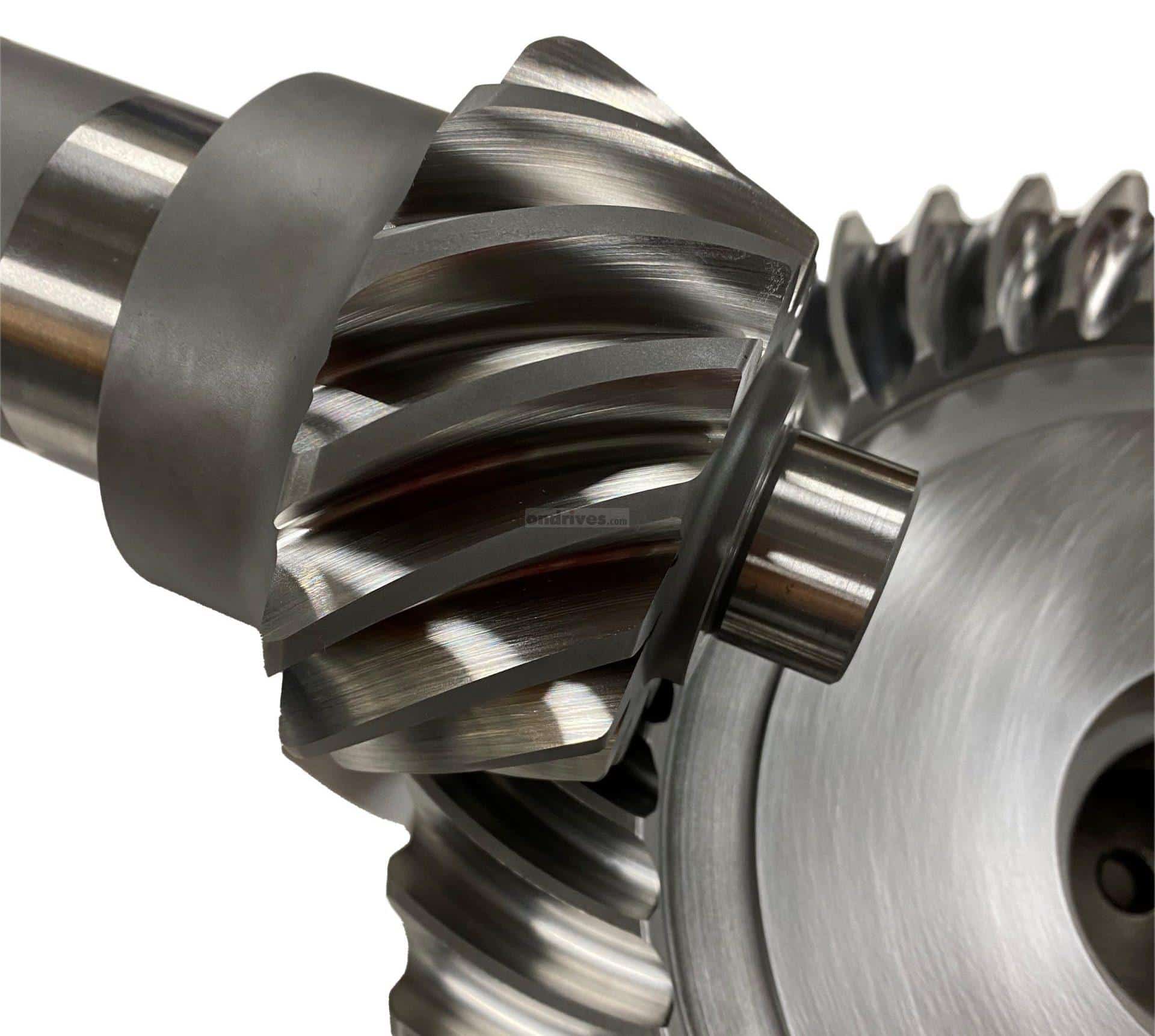
Can spiral gears be used in heavy-duty industrial machinery?
Yes, spiral gears can be effectively used in heavy-duty industrial machinery. They offer several advantages that make them suitable for such applications. Here’s why spiral gears are well-suited for heavy-duty industrial machinery:
- High Load Capacity: Spiral gears have a high load-carrying capacity, allowing them to handle heavy loads encountered in industrial machinery. The helical tooth profile distributes the load across multiple teeth, reducing stress concentration and enhancing overall load-bearing capability.
- Smooth Operation: The helical tooth arrangement of spiral gears ensures smooth and precise gear operation. The gradual tooth engagement minimizes impact and vibrations, resulting in smoother gear meshing and reduced noise levels. This smooth operation is crucial in heavy-duty machinery to ensure reliable performance and minimize wear and tear.
- Efficient Power Transmission: Spiral gears offer efficient power transmission, making them suitable for heavy-duty applications. The helical tooth profile reduces sliding friction, resulting in improved power transmission efficiency and reduced energy losses. This efficiency is particularly important in industrial machinery where high power transmission and energy conservation are critical.
- Durability and Reliability: Spiral gears are known for their durability and reliability. The gradual tooth engagement, load distribution, and reduced sliding friction contribute to their long-term performance under demanding conditions. Heavy-duty industrial machinery requires gears that can withstand continuous use and maintain high reliability, making spiral gears a suitable choice.
- Axial Thrust Compensation: Spiral gears can be designed with opposite helix angles on mating gears to cancel out axial thrust. This axial thrust compensation simplifies gear design and reduces the need for additional components such as thrust bearings. It is particularly advantageous in heavy-duty machinery, where minimizing axial forces and ensuring smooth operation are critical.
Considering their high load capacity, smooth operation, efficient power transmission, durability, and axial thrust compensation, spiral gears are well-suited for heavy-duty industrial machinery. They can handle the demanding requirements and provide reliable performance, making them a preferred choice in many heavy-duty applications.
What is the impact of helix angle on spiral gear performance?
The helix angle plays a crucial role in determining the performance characteristics of spiral gears. It affects various aspects of gear operation and functionality. Here’s the impact of the helix angle on spiral gear performance:
- Load-Carrying Capacity: The helix angle influences the load-carrying capacity of spiral gears. A larger helix angle results in a more pronounced helical shape of the teeth, providing a larger contact area between the gears. This increased contact area allows spiral gears to distribute the load over more teeth, thereby increasing their load-carrying capacity. Gears with larger helix angles can handle higher loads and transmit more torque.
- Smoothness of Operation: The helix angle significantly affects the smoothness of gear operation. A larger helix angle leads to a more gradual tooth engagement as the gears mesh. This gradual engagement reduces impact and vibration during gear meshing, resulting in smoother operation and reduced noise levels. Spiral gears with larger helix angles are known for their quiet operation and enhanced gear meshing characteristics.
- Efficiency and Power Transmission: The helix angle also influences the efficiency of power transmission in spiral gears. A larger helix angle reduces sliding friction between the teeth during meshing. This reduction in friction results in improved power transmission efficiency and reduced energy losses. Gears with larger helix angles are more efficient in transmitting power, making them suitable for applications where power efficiency is a critical factor.
- Axial Thrust and Thrust Load: The helix angle affects the axial thrust and thrust load in spiral gears. Axial thrust is the force generated in the axial direction due to the helical tooth arrangement. A larger helix angle produces a higher axial thrust, while a smaller angle generates a lower axial thrust. The axial thrust must be considered and managed in gear design to ensure proper gear support and minimize the need for additional thrust bearings.
- Contact Pattern and Gear Meshing: The helix angle influences the contact pattern between the teeth during gear meshing. A larger helix angle shifts the contact pattern across the tooth face, allowing for more even distribution of the load and reduced stress concentration. The contact pattern also affects the gear meshing characteristics, such as tooth wear and noise generation. Proper selection of the helix angle ensures optimal contact pattern and improved gear meshing performance.
The choice of helix angle in spiral gears depends on the specific application requirements, including load capacity, smoothness of operation, power transmission efficiency, and axial thrust considerations. By selecting an appropriate helix angle, engineers can optimize spiral gear performance for different applications, ensuring reliable and efficient gear operation.
What are spiral gears and how are they used in machinery?
Spiral gears are a type of cylindrical gears with teeth that are curved in a spiral pattern. Unlike straight-cut gears, which have teeth that are parallel to the gear axis, spiral gears have teeth that are angled or helical. This helical tooth arrangement provides several advantages in terms of performance and noise reduction.
Spiral gears are commonly used in machinery for various applications due to the following reasons:
- Smooth and Quiet Operation: The helical tooth arrangement of spiral gears enables gradual tooth engagement, resulting in smoother and quieter operation compared to straight-cut gears. The angled teeth allow for gradual contact, reducing noise and vibration during gear meshing.
- Increased Load Capacity: The helical tooth design of spiral gears distributes the load over multiple teeth, increasing the load-carrying capacity. This makes spiral gears suitable for applications that require high torque transmission and heavy-duty operations.
- Improved Efficiency: The helical tooth arrangement of spiral gears helps in minimizing sliding friction between the teeth. This results in a higher level of efficiency compared to straight-cut gears, as there is reduced power loss due to friction during gear operation.
- Axial Thrust Compensation: Spiral gears can be designed with opposite helix angles on mating gears, which helps in canceling out the axial thrust generated during gear meshing. This feature eliminates the need for additional thrust bearings, simplifying the gear design and reducing complexity.
- Versatility: Spiral gears can be manufactured in various configurations, including spur, helical, and double helical designs. This versatility allows for their application in a wide range of machinery, including automotive systems, industrial equipment, and power transmission systems.
In machinery, spiral gears are commonly used in applications that require smooth operation, high load capacity, and efficient power transmission. Some examples include gearboxes, automotive differentials, machine tools, and heavy-duty industrial machinery.
Overall, the unique tooth geometry of spiral gears makes them a preferred choice in many machinery applications, offering improved performance, reduced noise, and enhanced load-carrying capabilities.
editor by CX 2023-10-21
China manufacturer High-Performance T Series Spiral Bevel Gear Steering Gear Box for Manufacturing Equipment spiral bevel gear
Product Description
| Product Features | Description |
| Product Models | T2, T4, T6, T7, T8, T10, T12, T16, T20, T25, Z2, Z4, Z6, Z7, Z8, Z10, Z12, Z16, Z20, Z25, JRTM2, JRTM4, JRTM6, JRTM7, JRTM8, JRTM10, JRTM12, JRTM16, JRTM20, JRTM25 |
| Maintenance | Clean internally and replace lubricant after initial use of 2 weeks or 100-200 hours. For long-term use, replace lubricant every half to 1 year or every 1000-2000 hours |
| Lubricant | China Petroleum’s all-effect gear oil of 90-120 degrees. Under low speed and light load conditions, it is recommended to use all-effect gear oil of 90 degrees. Under heavy load and high temperature conditions, it is recommended to use all-effect gear oil of 120 degrees |
| Product Description | The T series spiral bevel gear steering gearbox is widely used in food, pharmaceutical, chemical, steel, metallurgy, textile, plastic, paper and other machinery equipment, assembly lines and other industries |
| Technical Features | The gearbox has a high rigidity FC-25 cast iron casing. The gears are made of high-quality high-purity alloy steel 20CrMnTi carburized and quenched, and ground. The shaft is tempered alloy steel with high load-bearing capacity. It is equipped with a heavy load-bearing tapered roller bearing. The oil seal has a double lip seal, which has dustproof and oil leakage prevention capabilities |
| Performance Features | The T series spiral bevel gear steering gearbox is standardized and has many varieties. The speed ratio is all actual transmission ratios, with an average efficiency of 98%. It can run CHINAMFG and reverse, with smooth low-speed or high-speed transmission, low noise, small vibration, and large bearing force |
| Technical Parameters | Speed ratio range: 1/1, 1.5/1, 2/1, 2.5/1, 3/1, 4/1, 5/1. Torque range: 11.2 – 5713 Nm. Power range: 0.014 – 335 kW |
·Product Models: T2, T4, T6, T7, T8, T10, T12, T16, T20, T25, Z2, Z4, Z6, Z7, Z8, Z10, Z12, Z16, Z20, Z25, JRTM2, JRTM4, JRTM6, JRTM7, JRTM8, JRTM10, JRTM12, JRTM16, JRTM20, JRTM25.
·Maintenance: The gearbox should be cleaned internally and the lubricant should be replaced after the initial use of 2 weeks or 100-200 hours. For long-term use, the lubricant should be replaced every half to 1 year or every 1000-2000 hours.
·Lubricant: The product uses China Petroleum’s all-effect gear oil of 90-120 degrees. Under low speed and light load conditions, it is recommended to use all-effect gear oil of 90 degrees. Under heavy load and high temperature conditions, it is recommended to use all-effect gear oil of 120 degrees.
·Product Description: The T series spiral bevel gear steering gearbox is widely used in food, pharmaceutical, chemical, steel, metallurgy, textile, plastic, paper and other machinery equipment, assembly lines and other industries.
·Technical Features: The gearbox has a high rigidity FC-25 cast iron casing. The gears are made of high-quality high-purity alloy steel 20CrMnTi carburized and quenched, and ground. The shaft is tempered alloy steel with high load-bearing capacity. It is equipped with a heavy load-bearing tapered roller bearing. The oil seal has a double lip seal, which has dustproof and oil leakage prevention capabilities.
·Performance Features: The T series spiral bevel gear steering gearbox is standardized and has many varieties. The speed ratio is all actual transmission ratios, with an average efficiency of 98%. It can run CHINAMFG and reverse, with smooth low-speed or high-speed transmission, low noise, small vibration, and large bearing force.
| Application: | Motor, Electric Cars, Motorcycle, Machinery, Marine, Toy, Agricultural Machinery, Car |
|---|---|
| Function: | Distribution Power, Clutch, Change Drive Torque, Change Drive Direction, Speed Changing, Speed Reduction, Speed Increase |
| Layout: | Coaxial |
| Hardness: | Hardened Tooth Surface |
| Installation: | Horizontal Type |
| Step: | Three-Step |
| Samples: |
US$ 100/Piece
1 Piece(Min.Order) | |
|---|
Can spiral gears be used in automotive applications?
Yes, spiral gears can be used in automotive applications and provide several advantages in this context. Here’s why spiral gears are suitable for automotive applications:
- Noise Reduction: Spiral gears offer significant noise reduction compared to other gear types, making them ideal for automotive applications that require quiet operation. The helical tooth arrangement minimizes gear meshing noise by providing gradual tooth engagement, reducing impact and vibration.
- Smooth Operation: The gradual tooth engagement of spiral gears also contributes to smoother gear operation. This smoothness helps to improve shifting performance, leading to enhanced driving comfort and reduced wear on transmission components.
- High Load Capacity: Spiral gears have a high load-carrying capacity, which is important in automotive applications where gears are subjected to varying loads. They can handle the torque requirements of transmissions and differential systems effectively.
- Efficient Power Transmission: Spiral gears offer efficient power transmission due to their helical tooth profile. This efficiency helps optimize fuel consumption and overall vehicle performance. By reducing energy losses through improved tooth contact and reduced sliding friction, spiral gears contribute to better power transfer.
- Durability and Reliability: Automotive applications demand gears that can withstand continuous use and provide long-term reliability. Spiral gears are known for their durability, thanks to load distribution and reduced stress concentration. They can maintain reliable performance even under challenging conditions.
- Axial Thrust Compensation: Spiral gears can be designed with opposite helix angles to cancel out axial thrust. This feature is particularly beneficial in automotive applications where minimizing axial forces is crucial. It simplifies gear design and reduces the need for additional components, enhancing space efficiency.
Considering their noise reduction capabilities, smooth operation, high load capacity, efficient power transmission, durability, and axial thrust compensation, spiral gears are well-suited for various automotive applications. They are commonly used in transmissions, differentials, and other drivetrain components to ensure reliable and efficient power transfer, contributing to overall vehicle performance and comfort.
How do you calculate the gear ratio in a spiral gear system?
The gear ratio in a spiral gear system can be calculated by comparing the number of teeth on the driving gear (pinion) to the number of teeth on the driven gear (gear). The gear ratio represents the ratio of the angular velocity (speed) of the driving gear to the angular velocity of the driven gear. Here’s the formula to calculate the gear ratio:
Gear Ratio = Number of Teeth on Driven Gear / Number of Teeth on Driving Gear
For example, consider a spiral gear system where the driving gear (pinion) has 20 teeth, and the driven gear (gear) has 40 teeth. The gear ratio can be calculated as follows:
Gear Ratio = 40 / 20 = 2
In this example, the gear ratio is 2, which means the driven gear will rotate at half the speed of the driving gear. This calculation assumes that the gears have the same module (gear size) and that there are no additional gear stages in the system.
It’s important to note that the gear ratio determines the speed and torque relationship between the driving and driven gears. A gear ratio greater than 1 (e.g., 2, 3, etc.) indicates a reduction in speed and an increase in torque, while a gear ratio less than 1 (e.g., 0.5, 0.75, etc.) indicates an increase in speed and a reduction in torque.
When working with spiral gears, it’s essential to consider the helix angle and axial thrust in addition to the gear ratio to ensure proper gear design and performance.
Can you explain the advantages of using spiral gears over other gear types?
Spiral gears, also known as helical gears, offer several advantages over other gear types. These advantages stem from their unique design and characteristics. Here are some key advantages of using spiral gears:
- Smooth and Quiet Operation: The helical tooth arrangement in spiral gears enables gradual tooth engagement, resulting in smoother and quieter operation compared to straight-cut gears. The angled teeth allow for gradual contact, reducing impact and noise during gear meshing.
- High Load Capacity: Spiral gears can handle higher loads compared to straight-cut gears. The helical tooth design distributes the load over multiple teeth, increasing the load-carrying capacity and providing improved strength. This makes spiral gears well-suited for applications that require the transmission of high torque or the handling of significant loads.
- Efficient Power Transmission: Spiral gears exhibit higher efficiency compared to straight-cut gears. The helical tooth arrangement helps minimize sliding friction between the teeth, resulting in reduced power losses due to friction during gear operation. This efficiency is crucial in applications where power transmission needs to be optimized, and energy losses need to be minimized.
- Reduced Noise and Vibration: The gradual tooth engagement in spiral gears leads to reduced impact and vibration during gear meshing. This results in quieter operation, making spiral gears suitable for applications where noise reduction is important, such as in precision machinery or noise-sensitive environments.
- Axial Thrust Compensation: Spiral gears can be designed with opposite helix angles on mating gears, which helps cancel out the axial thrust generated during gear meshing. This feature eliminates the need for additional thrust bearings, simplifying the gear design and reducing complexity.
- Versatility and Adaptability: Spiral gears can be manufactured in various configurations, including spur, helical, and double helical designs. This versatility allows for their application in a wide range of machinery and systems, providing flexibility in gear design and usage.
These advantages make spiral gears a preferred choice in many applications where smooth operation, high load capacity, efficient power transmission, reduced noise, and versatility are important considerations.
editor by CX 2023-10-20
China wholesaler Best Hollow Bore Miter Box, Right Angle Gear Box with Bevel Gears Price manufacturer
Product Description
We are professional best hollow bore miter box, right angle gear box with bevel gears manufacturers and suppliers from China. All hollow bore miter box, right angle gear box with bevel gears will be tested with inspection reports before products shipment.
JTP Series Cubic Bevel Gearbox
Jacton JTP series cubic bevel gearbox is also known as cubic right angle miter gearbox, cubic 90 degree bevel gearbox, cubic miter bevel gear box, or cubic spiral bevel gear reducers. JTP series cubic bevel gearbox is a right-angle shaft type gear box of spiral bevel gears for general applications with high transmission capacity, high performance and high efficiency. 1:1, 1.5:1, 2:1, 3:1, 4:1 and 5:1 gear ratios as standard. 2 way(one input 1 output), 3 way(one input 2 output, or 2 input 1 output), 4 way(two input 2 output) drive shafts as standard. CHINAMFG shaft as standard, customize hollow shaft or motor flange to bolt an IEC motor flange. Maximum torque 1299N.m. Maximum input and output speed 1450RPM. There are 8 models: JTP65 mini cubic bevel gearbox, JTP90 cubic bevel gearbox, JTP110 cubic bevel gearbox, JTP140 cubic bevel gearbox, JTP170 cubic bevel gearbox, JTP210 cubic bevel gearbox, JTP240 cubic bevel gearbox and JTP280 cubic bevel gearbox.
| JTP65 Mini Cubic Bevel Gearbox 1. bevel gear ratio 1:1 2. CHINAMFG drive shafts diameter12mm 3. CHINAMFG input and output shaft shafts 4. 2 way, 3 way, 4 way gearbox 5. input power maximum 1.8Kw 6. drive torque maximum 13.5Nm 7. maximum input 156567X3, registered Capital 500000CNY) is a leading manufacturer and supplier in China for screw jacks (mechanical actuators), bevel gearboxes, lifting systems, linear actuators, gearmotors and speed reducers, and others linear motion and power transmission products. We are Alibaba, Made-In-China and SGS (Serial NO.: QIP-ASI192186) audited manufacturer and supplier. We also have a strict quality system, with senior engineers, experienced skilled workers and practiced sales teams, we consistently provide the high quality equipments to meet the customers electro-mechanical actuation, lifting and positioning needs. CHINAMFG Industry guarantees quality, reliability, performance and value for today’s demanding industrial applications. Website 1: http://screw-jacks Website 2:
How do spiral gears contribute to reducing noise and vibration?Spiral gears contribute significantly to reducing noise and vibration in gear systems. Their unique design and characteristics help minimize unwanted sound and vibrations. Here’s how spiral gears achieve noise and vibration reduction:
Collectively, these factors—gradual tooth engagement, improved contact pattern, load distribution, and reduced sliding friction—contribute to the noise and vibration reduction achieved by spiral gears. This makes them particularly suitable for applications where quiet operation and minimal vibration are essential, such as precision machinery, automotive transmissions, and other noise-sensitive environments.
How do spiral gears handle variations in speed and load conditions?Spiral gears, also known as helical gears, are designed to effectively handle variations in speed and load conditions. Their unique tooth profile and design features allow them to adapt to changing operating conditions. Here’s how spiral gears handle variations in speed and load:
These features and design characteristics of spiral gears enable them to handle variations in speed and load conditions effectively. Their ability to provide gradual tooth engagement, distribute loads, transmit power efficiently, handle shock loads, and accommodate flexible gear design makes them suitable for diverse applications where speed and load variations are encountered.
How do spiral gears differ from other types of gears?Spiral gears, also known as helical gears, have distinct differences compared to other types of gears. These differences primarily stem from the helical tooth arrangement in spiral gears. Here’s how spiral gears differ from other gear types:
These differences make spiral gears well-suited for applications that require smooth operation, high load capacity, and efficient power transmission. They are commonly used in gearboxes, automotive differentials, machine tools, and various industrial machinery. In summary, spiral gears stand out from other gear types due to their helical tooth arrangement, resulting in smoother operation, increased load capacity, improved efficiency, and versatility.
China supplier Inline Helical Geared Motor Gearbox Parallel Shaft Bevel Reducer Speed Spiral 90 Degree Right Angle Straight Supplyer Competitive Price Stainless Steel Gearbox bevel spiral gearProduct Description
Inline Helical Geared Motor Gearbox Parallel Shaft Bevel Reducer Speed Spiral 90 Degree Right Angle Straight Supplyer Competitive Price Stainless Steel Gearbox
What lubrication and maintenance practices are required for spiral gears?Spiral gears require proper lubrication and maintenance to ensure optimal performance and longevity. Here are the recommended lubrication and maintenance practices for spiral gears:
By following these lubrication and maintenance practices, spiral gears can maintain their efficiency, durability, and reliability over time. Regular attention to lubrication, monitoring, and maintenance contributes to the smooth operation and extended lifespan of spiral gears in various applications.
How do you calculate the gear ratio in a spiral gear system?The gear ratio in a spiral gear system can be calculated by comparing the number of teeth on the driving gear (pinion) to the number of teeth on the driven gear (gear). The gear ratio represents the ratio of the angular velocity (speed) of the driving gear to the angular velocity of the driven gear. Here’s the formula to calculate the gear ratio: Gear Ratio = Number of Teeth on Driven Gear / Number of Teeth on Driving Gear For example, consider a spiral gear system where the driving gear (pinion) has 20 teeth, and the driven gear (gear) has 40 teeth. The gear ratio can be calculated as follows: Gear Ratio = 40 / 20 = 2 In this example, the gear ratio is 2, which means the driven gear will rotate at half the speed of the driving gear. This calculation assumes that the gears have the same module (gear size) and that there are no additional gear stages in the system. It’s important to note that the gear ratio determines the speed and torque relationship between the driving and driven gears. A gear ratio greater than 1 (e.g., 2, 3, etc.) indicates a reduction in speed and an increase in torque, while a gear ratio less than 1 (e.g., 0.5, 0.75, etc.) indicates an increase in speed and a reduction in torque. When working with spiral gears, it’s essential to consider the helix angle and axial thrust in addition to the gear ratio to ensure proper gear design and performance.
What industries commonly use spiral gears in their applications?Spiral gears, also known as helical gears, find applications in various industries due to their unique design and advantages. Here are some industries that commonly use spiral gears:
These are just a few examples of industries that commonly use spiral gears. However, spiral gears can be found in various other applications where the advantages of smooth operation, high load capacity, efficient power transmission, and reduced noise levels are desired.
China Best Sales Customized Color POM Straight Bevel Gear Wear Resistance Nylon Spiral Bevel Gears hypoid bevel gearProduct Description
Click Here Get More Information Our Advantages
Equipment Processing Materials Tolerance Quality Assurance Surface Treatment
Machining Workshop Production Process Quality Guarantee
Click Here Get Free Quotation
Application industry CNC Machining Parts Can Be Used in Many Industry Aerospace/ Marine/ Metro/ Motorbike/ Automotive industries, Instruments & Meters, Office equipments, Home appliance, Medical equipments, Telecommunication, Electrical & Electronics, Fire detection system, etc
Areospace Cylinder Heads, Turbochargers, Crankshafts, Connecting Rods Pistons, Bearing Caps, CV Joints, Steering Knuckles, Brake Calipers,Gears,Differential Housing, Axle Shafts
Auto&Motorcycle Cylinder Heads, Turbochargers, Crankshafts, Connecting Rods Pistons,Bearing Caps, CV Joints, Steering Knuckles, Brake Calipers,Gears, Differential Housing, Axle Shafts
Energy Drill Pipes and Casing, Impellers Casings, Pipe Control Valves, Shafts, Wellhead Equipment, Mud Pumps, Frac Pumps, Frac Tools,Rotor Shafts and disc
Robotics Custom robotic end-effectors, Low-volume prototype, Pilot, Enclosures, Custom tooling, Fixturing
Medical Industry Rotary Bearing Seal Rings for CHINAMFG Knife,CT Scanner Frames,Mounting Brackets,Card Retainers for CT Scanners,Cooling Plenums for CT Scanners,Brackets for CT Scanners,Gearbox Components,Actuators,Large Shafts
Home Appliances Screws, hinges, handles, slides, turntables, pneumatic rods, guide rails, steel drawers
Certifications
FAQ Q1. What kind of production service do you provide? Q2. How about the lead time? Q3. How about your quality? Q4. How long should we take for a quotation? Q5. What is your quotation element? Q6. What is your payment term?
Can spiral gears be used in heavy-duty industrial machinery?Yes, spiral gears can be effectively used in heavy-duty industrial machinery. They offer several advantages that make them suitable for such applications. Here’s why spiral gears are well-suited for heavy-duty industrial machinery:
Considering their high load capacity, smooth operation, efficient power transmission, durability, and axial thrust compensation, spiral gears are well-suited for heavy-duty industrial machinery. They can handle the demanding requirements and provide reliable performance, making them a preferred choice in many heavy-duty applications.
What is the impact of helix angle on spiral gear performance?The helix angle plays a crucial role in determining the performance characteristics of spiral gears. It affects various aspects of gear operation and functionality. Here’s the impact of the helix angle on spiral gear performance:
The choice of helix angle in spiral gears depends on the specific application requirements, including load capacity, smoothness of operation, power transmission efficiency, and axial thrust considerations. By selecting an appropriate helix angle, engineers can optimize spiral gear performance for different applications, ensuring reliable and efficient gear operation.
Can you describe the unique tooth profile of spiral gears?The unique tooth profile of spiral gears, also known as helical gears, sets them apart from other gear types. Here is a description of the key characteristics of the tooth profile:
These unique characteristics of the tooth profile in spiral gears, such as the helical shape, curved tooth surface, lead, contact pattern, and helix angle, contribute to their smooth operation, efficient power transmission, and ability to handle high loads. The tooth profile design of spiral gears is crucial in achieving reliable and effective gear meshing in various mechanical systems and applications.
China manufacturer Customize Design Metal Steel Spiral Bevel Gear straight bevel gearProduct Description
Customize Design Metal Steel Spiral Bevel Gear
HangZhou HUANBALL Professional custom and design precision machined parts. We provide custom complete turnkey precision machining solutions to thousands of customers in diverse markets throughout the world, including medical, automotive, marine, aerospace, defense, precision instrument, home appliance, electronics, machinery, oil & gas, sensors and more. We offer customized precision machining service and solutions that help customers meet strict operational demands.Serving a CHINAMFG customer base, we do this with: ==================================== FAQ ====================================== 1) Q: I haven’t done business with you before, how can i trust your company? 2) Q: How is quality ensured? 3) Q: Can i get 1 or more samples? 4) Q: Do you give any discounts? 5) Q: How to Custom-made(OEM/ODM)?
How do spiral gears contribute to reducing noise and vibration?Spiral gears contribute significantly to reducing noise and vibration in gear systems. Their unique design and characteristics help minimize unwanted sound and vibrations. Here’s how spiral gears achieve noise and vibration reduction:
Collectively, these factors—gradual tooth engagement, improved contact pattern, load distribution, and reduced sliding friction—contribute to the noise and vibration reduction achieved by spiral gears. This makes them particularly suitable for applications where quiet operation and minimal vibration are essential, such as precision machinery, automotive transmissions, and other noise-sensitive environments.
What are the benefits of using spiral gears in high-torque applications?Spiral gears, also known as helical gears, offer several benefits when used in high-torque applications. These advantages make them well-suited for transmitting large amounts of torque efficiently and reliably. Here are the key benefits of using spiral gears in high-torque applications:
These benefits make spiral gears an excellent choice for high-torque applications where reliable and efficient power transmission, smooth operation, reduced noise, and durability are essential requirements.
What are spiral gears and how are they used in machinery?Spiral gears are a type of cylindrical gears with teeth that are curved in a spiral pattern. Unlike straight-cut gears, which have teeth that are parallel to the gear axis, spiral gears have teeth that are angled or helical. This helical tooth arrangement provides several advantages in terms of performance and noise reduction. Spiral gears are commonly used in machinery for various applications due to the following reasons:
In machinery, spiral gears are commonly used in applications that require smooth operation, high load capacity, and efficient power transmission. Some examples include gearboxes, automotive differentials, machine tools, and heavy-duty industrial machinery. Overall, the unique tooth geometry of spiral gears makes them a preferred choice in many machinery applications, offering improved performance, reduced noise, and enhanced load-carrying capabilities.
China manufacturer OEM Spiral Bevel Gear for Machines with Good qualityProduct Description
OEM Spiral Bevel Gear for Machines 1. Description
2. Photos3. Order process
Can spiral gears be used in automotive applications?Yes, spiral gears can be used in automotive applications and provide several advantages in this context. Here’s why spiral gears are suitable for automotive applications:
Considering their noise reduction capabilities, smooth operation, high load capacity, efficient power transmission, durability, and axial thrust compensation, spiral gears are well-suited for various automotive applications. They are commonly used in transmissions, differentials, and other drivetrain components to ensure reliable and efficient power transfer, contributing to overall vehicle performance and comfort.
How do spiral gears handle variations in speed and load conditions?Spiral gears, also known as helical gears, are designed to effectively handle variations in speed and load conditions. Their unique tooth profile and design features allow them to adapt to changing operating conditions. Here’s how spiral gears handle variations in speed and load:
These features and design characteristics of spiral gears enable them to handle variations in speed and load conditions effectively. Their ability to provide gradual tooth engagement, distribute loads, transmit power efficiently, handle shock loads, and accommodate flexible gear design makes them suitable for diverse applications where speed and load variations are encountered.
How do spiral gears differ from other types of gears?Spiral gears, also known as helical gears, have distinct differences compared to other types of gears. These differences primarily stem from the helical tooth arrangement in spiral gears. Here’s how spiral gears differ from other gear types:
These differences make spiral gears well-suited for applications that require smooth operation, high load capacity, and efficient power transmission. They are commonly used in gearboxes, automotive differentials, machine tools, and various industrial machinery. In summary, spiral gears stand out from other gear types due to their helical tooth arrangement, resulting in smoother operation, increased load capacity, improved efficiency, and versatility.
قام بالتحرير Zqq. أرسل طلب عرض أسعار
| |||||||||||||||||||||||||||||||||||||||||||||||||||||||||||||||||||||||||||||||||||||||||||||||||||||||||||||||||||||||||||||||||||||||||||||||||||||||||||||||||||||||||||||||||||||||||||||||||||||||||||||||||||||||||||||||||||||||||||||||||||||||||||||||||||||||||||||||||||||||||||||||||||||||||||||||||||||||||||||||||||||||||||||||||||||||||||||||||||||||||||||||||||||||||||||||||||||||||||||||||||||||||||||||||||||||||||||||||||||||||||||||||||