Product Description
Gearbox Reducer Machining Auto Spare Parts Metal Transmission Drive Steering Wheel Angular Right Angle Spiral Straight Bevel Gears Hypoid Pinion Shaft Gear
Features
1. High precision gear for smooth, quiet operation.
2. Flexible for custom-made requests.
3. Stable transmission, low impact, vibration and noise.
4. Heavy Load capability, more compact, but less complex.
Product Description
| Products | Spur Gear, Helical Gear, Herringbone Gear, Spiral Bevel Gear, Straight Bevel Gear, Worm Gear, Shaft, Pinion |
| Module | M0.3-M10 |
| Precision grade | DIN6, DIN7, DIN8, DIN10 |
| Pressure angle | 14.5 degree, 15 degree, 20 degree |
| Material | Medium Carbon Steel: 35#, 45# Carburizing Steel: 20CrMnTi, 20CrMnMo, 20CrMo Alloy Steel: 40Cr, 35CrMo, 42CrMo, 40CrNiMo Cast Iron: HT250, QT400 Copper, Stainless Steel, Brass, Nylon, POM, and so on |
| Heat treatment | Hardening & Tempering, Surface Quenching, Integral Quenching, Carburizing Quenching, Tempering, Normalizing, Nitriding |
| Surface treatment | Blacking, Polishing, Anodization, Chrome Plating, Zinc Plating, Nickel Plating |
| Application | Gearbox and reducer; Precision cutting machines, Lathes machines; Milling machines; Grinder machine; Automated mechanical systems; Automated warehousing systems. Gear hobbing machines, gear shapers, gear shaving machines, gear milling, gear grinding machines and many kinds of gear-related machines. |
| Machining process | Forging, Machining, Hobbing, Milling, Shaving, Grinding, Heat treatment… |
Detailed Photos
Our Advantages
Related Product
Company Profile
FAQ
Q: How to ship the bevel gear to us?
A: It is available by air, sea, or train.
Q: How to pay the money?
A: T/T and L/C are preferred, with different currencies, including USD, EUR, RMB, etc.
Q: How can I know if the product is suitable for me?
A: >1ST confirm drawing and specification >2nd test sample >3rd start mass production.
Q: Can I come to your company to visit?
A: Yes, you are welcome to visit us at any time.
| Application: | Machinery, Bevel Gearbox |
|---|---|
| Hardness: | Hardened Tooth Surface |
| Gear Position: | External Gear |
| Samples: |
US$ 50/Piece
1 Piece(Min.Order) | Order Sample bevel gear
|
|---|
| Customization: |
Available
| Customized Request |
|---|
.shipping-cost-tm .tm-status-off{background: none;padding:0;color: #1470cc}
|
Shipping Cost:
Estimated freight per unit. |
about shipping cost and estimated delivery time. |
|---|
| Payment Method: |
|
|---|---|
|
Initial Payment Full Payment |
| Currency: | US$ |
|---|
| Return&refunds: | You can apply for a refund up to 30 days after receipt of the products. |
|---|
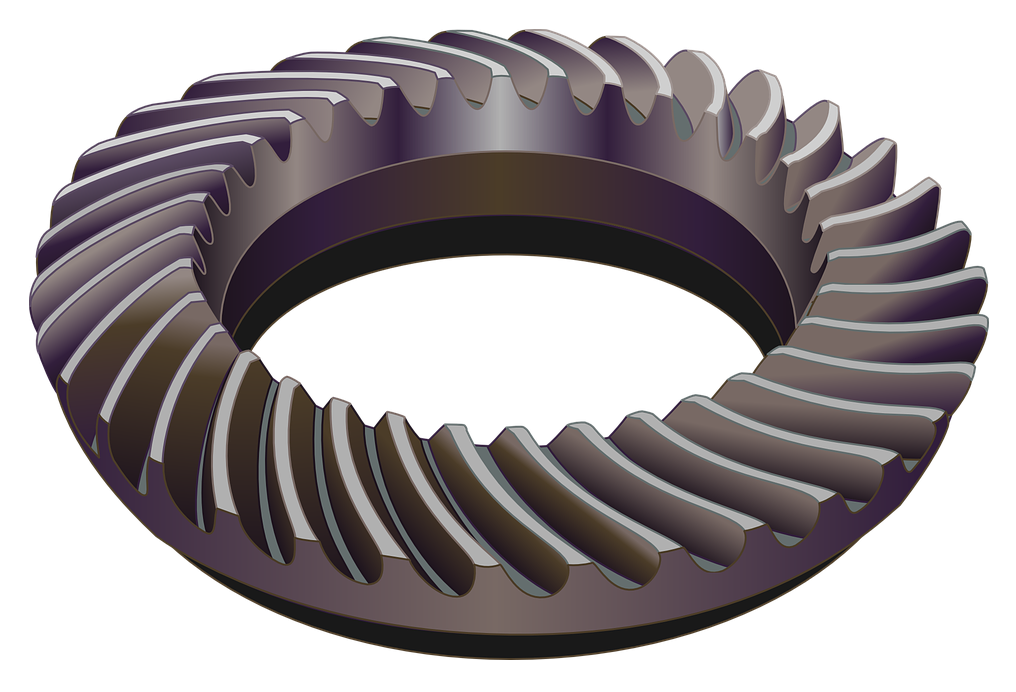
How do spiral gears handle variations in tooth engagement during operation?
Spiral gears are designed to handle variations in tooth engagement during operation effectively. The unique helical tooth arrangement of spiral gears allows them to accommodate these variations and provide several benefits. Here’s how spiral gears handle variations in tooth engagement:
- Gradual Engagement: One of the key advantages of spiral gears is their ability to achieve gradual tooth engagement. As the gears rotate, the helical shape of the teeth allows them to come into contact gradually, starting from one end of the gear to the other. This gradual engagement minimizes the impact and shock that would occur with sudden full tooth contact in other gear types. It results in smoother and quieter operation, reducing noise, vibrations, and stress on the gear system.
- Increased Tooth Contact Area: Spiral gears provide a larger tooth contact area compared to straight-cut or spur gears. The helical tooth profile extends the contact length along the gear face, distributing the load over multiple teeth at any given moment. This increased contact area enables spiral gears to handle higher loads and transmit torque more efficiently.
- Load Sharing: Due to the helical arrangement, spiral gears naturally distribute the load across multiple teeth. This load-sharing characteristic helps to minimize tooth wear and fatigue. As the gears rotate, different teeth come into contact, ensuring that the load is distributed evenly. This load sharing capability enhances the gear system’s durability and extends its service life, particularly in applications with fluctuating loads.
- Reduction of Side Thrust: Spiral gears generate an axial thrust force during operation. However, by using pairs of spiral gears with opposite helix angles, this side thrust force can be greatly reduced or even eliminated. When paired gears with opposite helix angles mesh together, the axial thrust forces cancel each other out. This eliminates the need for additional thrust bearings or complex gear arrangements to counteract the axial forces, simplifying the gear system design.
- Improved Lubrication: The helical tooth profile of spiral gears promotes better lubrication. The continuous sliding motion between the teeth creates a pumping action that helps distribute lubricant along the tooth surfaces. This improved lubrication reduces friction, heat generation, and wear, enhancing the overall efficiency and longevity of the gear system.
These features of spiral gears—gradual engagement, increased tooth contact area, load sharing, reduction of side thrust, and improved lubrication—make them highly effective in handling variations in tooth engagement during operation. Spiral gears are commonly used in various applications such as automotive transmissions, industrial machinery, and power generation systems, where smooth and reliable power transmission is crucial.
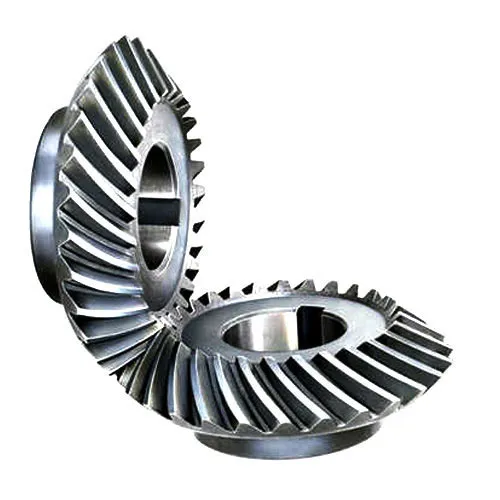
What is the impact of helix angle on spiral gear performance?
The helix angle plays a crucial role in determining the performance characteristics of spiral gears. It affects various aspects of gear operation and functionality. Here’s the impact of the helix angle on spiral gear performance:
- Load-Carrying Capacity: The helix angle influences the load-carrying capacity of spiral gears. A larger helix angle results in a more pronounced helical shape of the teeth, providing a larger contact area between the gears. This increased contact area allows spiral gears to distribute the load over more teeth, thereby increasing their load-carrying capacity. Gears with larger helix angles can handle higher loads and transmit more torque.
- Smoothness of Operation: The helix angle significantly affects the smoothness of gear operation. A larger helix angle leads to a more gradual tooth engagement as the gears mesh. This gradual engagement reduces impact and vibration during gear meshing, resulting in smoother operation and reduced noise levels. Spiral gears with larger helix angles are known for their quiet operation and enhanced gear meshing characteristics.
- Efficiency and Power Transmission: The helix angle also influences the efficiency of power transmission in spiral gears. A larger helix angle reduces sliding friction between the teeth during meshing. This reduction in friction results in improved power transmission efficiency and reduced energy losses. Gears with larger helix angles are more efficient in transmitting power, making them suitable for applications where power efficiency is a critical factor.
- Axial Thrust and Thrust Load: The helix angle affects the axial thrust and thrust load in spiral gears. Axial thrust is the force generated in the axial direction due to the helical tooth arrangement. A larger helix angle produces a higher axial thrust, while a smaller angle generates a lower axial thrust. The axial thrust must be considered and managed in gear design to ensure proper gear support and minimize the need for additional thrust bearings.
- Contact Pattern and Gear Meshing: The helix angle influences the contact pattern between the teeth during gear meshing. A larger helix angle shifts the contact pattern across the tooth face, allowing for more even distribution of the load and reduced stress concentration. The contact pattern also affects the gear meshing characteristics, such as tooth wear and noise generation. Proper selection of the helix angle ensures optimal contact pattern and improved gear meshing performance.
The choice of helix angle in spiral gears depends on the specific application requirements, including load capacity, smoothness of operation, power transmission efficiency, and axial thrust considerations. By selecting an appropriate helix angle, engineers can optimize spiral gear performance for different applications, ensuring reliable and efficient gear operation.
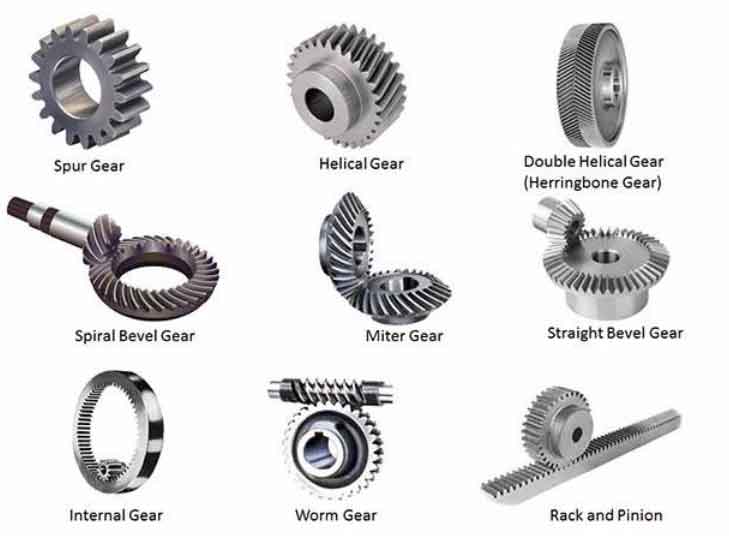
What are spiral gears and how are they used in machinery?
Spiral gears are a type of cylindrical gears with teeth that are curved in a spiral pattern. Unlike straight-cut gears, which have teeth that are parallel to the gear axis, spiral gears have teeth that are angled or helical. This helical tooth arrangement provides several advantages in terms of performance and noise reduction.
Spiral gears are commonly used in machinery for various applications due to the following reasons:
- Smooth and Quiet Operation: The helical tooth arrangement of spiral gears enables gradual tooth engagement, resulting in smoother and quieter operation compared to straight-cut gears. The angled teeth allow for gradual contact, reducing noise and vibration during gear meshing.
- Increased Load Capacity: The helical tooth design of spiral gears distributes the load over multiple teeth, increasing the load-carrying capacity. This makes spiral gears suitable for applications that require high torque transmission and heavy-duty operations.
- Improved Efficiency: The helical tooth arrangement of spiral gears helps in minimizing sliding friction between the teeth. This results in a higher level of efficiency compared to straight-cut gears, as there is reduced power loss due to friction during gear operation.
- Axial Thrust Compensation: Spiral gears can be designed with opposite helix angles on mating gears, which helps in canceling out the axial thrust generated during gear meshing. This feature eliminates the need for additional thrust bearings, simplifying the gear design and reducing complexity.
- Versatility: Spiral gears can be manufactured in various configurations, including spur, helical, and double helical designs. This versatility allows for their application in a wide range of machinery, including automotive systems, industrial equipment, and power transmission systems.
In machinery, spiral gears are commonly used in applications that require smooth operation, high load capacity, and efficient power transmission. Some examples include gearboxes, automotive differentials, machine tools, and heavy-duty industrial machinery.
Overall, the unique tooth geometry of spiral gears makes them a preferred choice in many machinery applications, offering improved performance, reduced noise, and enhanced load-carrying capabilities.


editor by CX 2023-10-12